

In the mid-2000s William and John Gaunt faced a stark choice. For almost two hundred years, Sunny Bank Mills had been central to Farsley as employers of generations of textile workers. The Mills were founded in 1829 by a group of weavers, a Gaunt amongst them. But now, in the 21st century, the textiles business was no longer viable: Sunny Bank Mills had to close. But what next? William and John could sell the site for apartments. Surely there was another way?
The Gaunts were determined to keep something of the spirit of Sunny Bank alive. These Mills provided work and economic security for generations of local families, with children often following parents and grandparents. In many ways, the Mills and the workers were the lifeblood of the community. And what a community life those workers enjoyed. The Mills was their life.
William and John Gaunt chose the difficult option – to keep the Mills open and invest in their community. Twenty years on, Sunny Bank Mills is a creative space for businesses, arts and heritage - for work, leisure and culture. There are workshops, shops, a gallery, cafes, studio and performance spaces, together providing a vibrant centre for the community of Farsley. We were keen to speak to some of the ex-workers, who remember the Sunny Bank as one of the best textile mills in the world. This is the story of Sunny Bank Mills, of the people who worked there, and of a remarkable rebirth.



“My great-grandfather was a bit of a wool tycoon at the beginning of the last century, started owning mills and bought Sunny Bank as part of that. Although he made a lot of money, he lost a lot.”
A Family Business
William Gaunt: Our name's Gaunt, which is Ghent in Flanders. We came across as weavers in about 1365. A long, long history of weaving and wool textiles. And eventually coalesced up here in Yorkshire. When the Industrial Revolution came along, we moved from being handloom weavers into [being) a bit more sophisticated. Sunny Bank Mills was formed by a group of weavers. And one of our ancestors were one of that group of weavers. My great-grandfather was a bit of a wool tycoon at the beginning of the last century, started owning mills and bought Sunny Bank as part of that. Although he made a lot of money, he lost a lot. We've got a long connection with the wool trade and West Yorkshire, a source of immense pride.
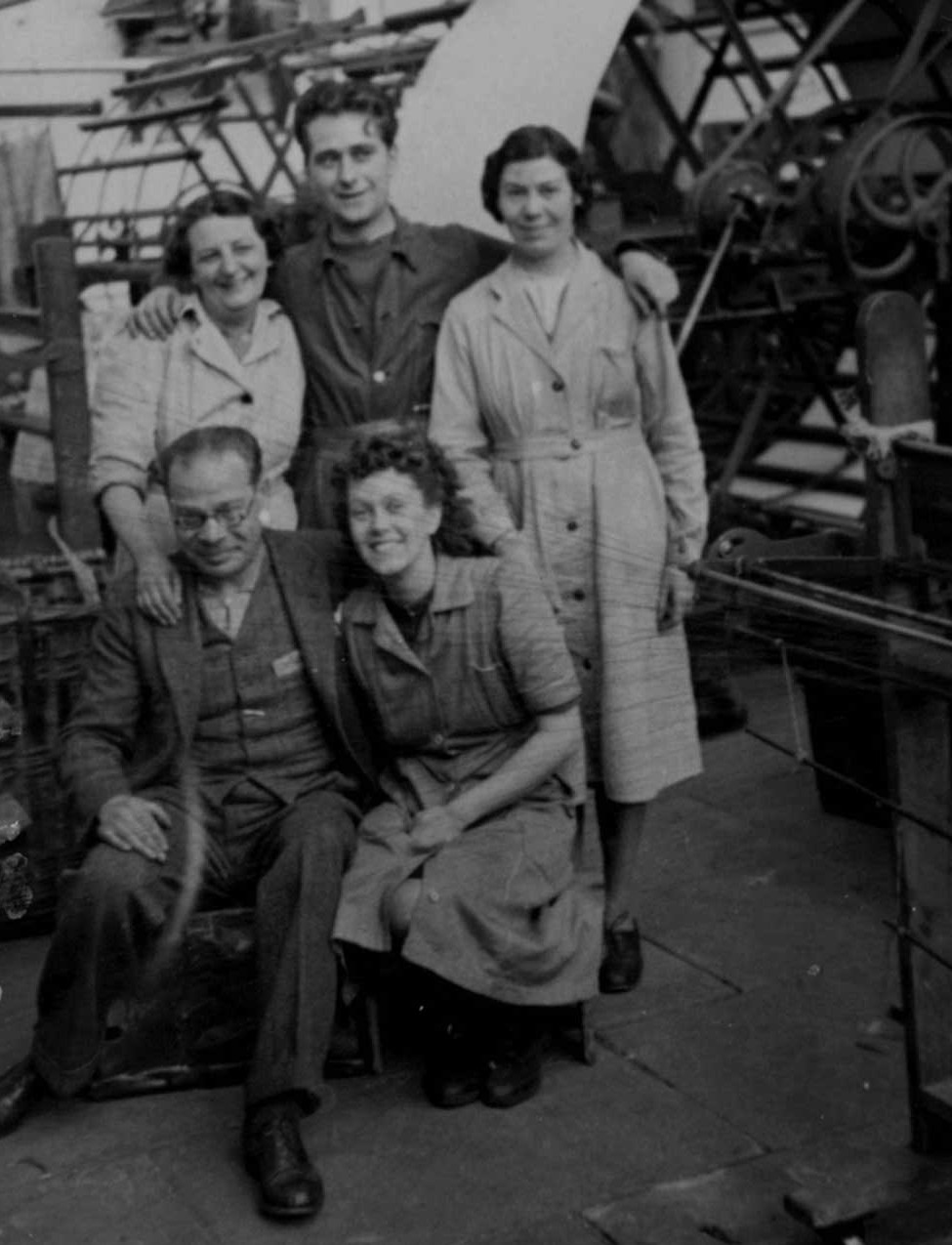
The Gaunt ownership of the Mills was not continuous. In 1882 they were bought by Edwin Woodhouse (even today, the Mills are known by some former workers as ‘Woodhouse’s’). William and John’s great grandfather, Billie Gaunt, bought the mills in in 1917. Billie sounds to have been quite a character, very much a risk-taker and entrepreneur. His business empire embraced not just the wool trade but West End theatres, imported cars, farms and a marine insurance company! The Mills made a profit out of the First World War, as they produced khaki for uniforms. However, after the 1929 financial crash, Billie faced debts and the threat of bankruptcy. Eventually, his son Alf Gaunt took over – William and John’s grandfather. Alf Gaunt was innovative and got the mills back on track, with Middle Eastern markets becoming increasingly important. Lois Carr worked as a mender alongside her sisters and mother. She, like others, remembers “Mr Gaunt” fondly.
Lois Carr: We thought a lot about Mr. Gaunt, because he was really good to my mum. She worked here. She had five children and it came to a six-week holiday. She went to Mr. Gaunt and says, “I thought I'd come and ask you, I don't think I'm going to be able to come into work for six weeks. I've got five children.” So he says, “Don't you worry, love, you keep an eye on your family.” She was able to go back to work after six weeks. I would not say anything against Mr. Gaunt or the family because to me they had a business to run and they ran it efficiently. Mr Gaunt, every day he used to walk around the whole Mill. The password, room to room, “Mr Gaunt's on his way, Mr Gaunt's on his way.”
-Alf-Gaunt.jpg)
“The owner of the mill, Alf Gaunt, he used to walk round the Mill twice a day and he knew most people by their first names. If you ever crossed him, that was it, you were written off. He'd never speak to you again. But, if you were all right with him, he was very fair with you.”
Lois’s co-workers had a habit of ordering clothes from catalogues and trying them on in working hours.
Lois: Mr Gaunt came in one day and Rosie - she was trying her dress on. She'd still got a full-length underskirt on. He says, “Oh dear Rosie, didn’t think it’d be that warm in here”. And she says: “Oh yeah, it is really warm”. And we were all trying to not let on that we’d been up to mischief - just to break the monotony.
Raymond Greaves: The owner of the mill, Alf Gaunt, he used to walk round the Mill twice a day and he knew most people by their first names. If you ever crossed him, that was it, you were written off. He'd never speak to you again. But, if you were all right with him, he was very fair with you. Once a year Mr Gaunt used to put a bus to the seaside. There'd be one day where they'd take you to Bridlington or Blackpool or Morecambe - just for a day. And this was free for anybody in the Mill that wanted to go. One chap used to organise the staff - managers and the main people running the departments, we'd go somewhere [at Christmas] I eventually did get included in this clan [when] I became Dye House Manager. We used to go to different pubs or restaurants. We used to get a donation from Mr Gaunt. He’d give us twenty quid or something to go towards the meals.
Jean Palfreyman: We had five children. And, of course, when it came to Christmas time, Mr Gaunt used to say, “The Palfs will need a big turkey because there's a lot of mouths to feed.” So we got it. He always sent me a bottle of wine. He was so kind. He was a really good boss.
Jackie Duffy: He was more like a grandad to me really. If you did anything above the call of duty, working later or otherwise, you’d come back on Monday morning and there’d be something in your desk, a little bar of chocolate or something. You know, he appreciated you and I think that’s the difference.
Raymond: [Mr Gaunt] used to have a sandwich at dinner time in his office. He'd have half an hour's break like we did. One day, somebody went in to see him after his lunch break, and he was laid over his desk, dead. He'd had a heart attack. Died on the job. He’d’ve loved that. That's just what he’d’ve wanted. He was in his 80s and he was still coming from Pateley Bridge every day to run the Mill.

After Alf Gaunt died, his sons Martin and David took over the business. Mr Martin and Mr David are remembered with a similar affection.
John Palfreyman Jnr: The Gaunts were not frightened to get their hands dirty. Times where needs must, or we’ve got an urgent order to get out, all hands on deck, let’s all muck in and do something.
Perhaps mindful that their father had overdone it, Martin and David retired in their 60s. In turn, their sons William and John, inherited the Mills. However, the brothers were encouraged to work at Sunny Bank from a young age.
William: I [came] in the holidays and literally swept the floor. They were big places to come to, and noisy. There was a distinct smell, of the wool and of the machine oil. My father never pressured me. But I was the oldest son, so there was some expectation. When you're a child and something's just gone on for generations, you don't think much about it. It's a way of life, I guess. It was a standard practice for mill-owning families that anyone from the family who joined the mill had to work in every single department right from the bottom so that they understood the mechanics of the job and each job in the mill. Some of the jobs were immensely skilled, so you weren't expected to apprentice all the skills, but you had to appreciate what the job entailed. Eventually you find an area of the mill that, you know, you instinctively gel with or have a skill set for. I like numbers and stuff like that, so accounts and controlling production was something that I had an aptitude for.
One of the things I did love was when I first started working here, they used to call me Master William, which was a throwback to when you were an apprenticed weaver. You became a master weaver. I went to Leeds University to study textiles in the mid-'80s, and I worked all my holidays at the mill, and that's how I paid my rent as a student, earning money here. [In the Mill] I was always in charge of costings. I worked alongside an accountant who was very generous with his knowledge and taught me a lot. He always quoted Dickens: “A penny is the difference between happiness and misery.”
When William and John took over, the sentiment behind that Dickens quote was to have major impact on the business – more of which later.


“The worsted cloth was very greasy and quite rough. You got that greasy mill smell, which I still smell when I go in different parts of the Mill. It sort of seeps into brickwork and floorboards.”
Office workers were in rather different roles. John Palfreyman Junior was the son of June Pierce and the Mill Manager who was also called John Palfreyman.
John Palfreyman Jnr: I was 16, and it was May 1972. The previous summer, we'd had a works experience, and my dad got me into a department called Pressure Dyeing, with a guy called Eddie Walshaw. A brilliant guy. It was good, it was interesting, but it wasn't for me. Then, when the opportunity came for me to leave school, Dad had a word with Mr Gaunt and the guy that ran the Export, or Shipping Department, and he got me in there. I had literally no skills at all, other than I could read, write, and answer the telephone, and I could use a typewriter. And that's where I started, straight from school. We used to do all the administration. Mr Gaunt would come in and say, “Right, Palf, get your notebook out, this is what I want you to raise an invoice for.” He'd dictate the amount, of pieces of cloth that were going to a particular customer, and from that we'd know exactly how much to charge that customer. All that information would be transferred on to an invoice using a typewriter. Invariably we had to have five or six original invoices, and each had to have a sheet of carbon paper put in between it. That was quite a nightmare. The typewriters, they were quite beastly things, so you really had to let rip with your fingers on the keys as well. Bear in mind that you're trying to get through eight sheets of paper and seven sheets of carbon paper. Bang, bang, bang, bang! When I left here and started working on the computer – “Palf, stop hitting the keys so hard!”
By contrast, Jackie Duffy was answering the telephone in the Mill Office after a rather surprising interview with Mr. Alf Gaunt.
Jackie Duffy: The interview went something like: “Can you type?” No. “Can you file, other than your nails?” No. “Can you answer a phone?” No. I didn't have a phone at the time. “Are you courting?” No. “Are you willing to learn?” Yes. “Start on Monday!” I started off as a green 15-year-old, not knowing anything. There were very influential people on the phone. [Alf Gaunt] would say, “Don't worry, they're all the same. They all do the same thing. They go to bed at night. Don't be worried about it, just be polite.” That was brilliant.
Raymond Greaves, rose from colour matcher to be the Dye House Manager.
Raymond Greaves: On my 17th birthday, I got a letter to say, yes, you've got this colour matching job. The colour matcher, he was only 10 years older than me. When I was 22 - he must have been about 32 - he was out delivering this paraffin for his mother, and he collapsed and died with a brain haemorrhage. Alf Gaunt, he had a word with the Dye House Manager and said, “Do you think he's capable of doing this job? Jack said, “Yeah.” So he said [to me], “I'll put you on a six-month trial, and if you're okay, then t’job's yours.”
At the peak time, there'd be four of us working in this, you know, in the Colour Matching Department. When I first started working here, there was about 250 people worked in the Mill. I finished up working for 48 years, finished up as Dye House Manager. Now, the Dye House Manager before me, he was there for 50 years - and his father was the Dye House Manager before him and he was there for 50 years. So three Dye House managers in this Mill with 150 years between them. Colour matching was a demanding task, attempting to get the wool as close as possible to the standard shade. It was: ‘a trial-and-error job. We did trials until we got it within acceptable comparison.

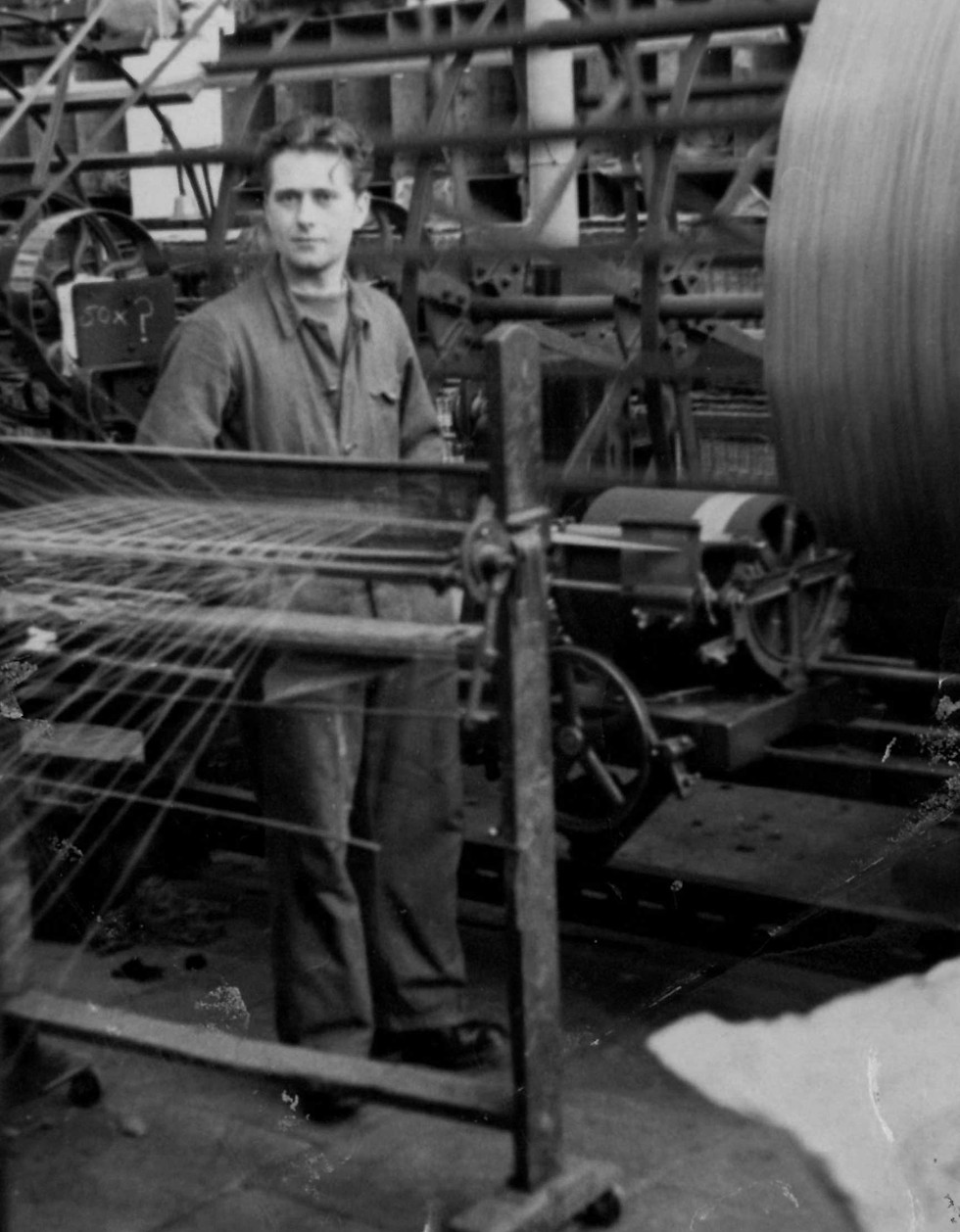
David Pollard worked at the Mills in various jobs during the 1970s. David’s family were long acquainted with the Sunny Bank!
David Pollard: When I left school, my grandma said to me, “Go and work with your granddad and your dad”, and I didn't want to do that, I didn't feel that textiles was where I wanted to be. But I got made redundant in 1976. My dad Roland, who'd been a warper all his life here, he said there's a job going. So I said, well, it'll be all right as a temporary stop, and I stayed there for four-and-a-half years.
I started work on the Monday, and I was put straight away with a gentleman called Donald Smith, who was the yarn store manager. Donald was a real character. He used to come to work in shorts, irrespective of what the weather was like outside. And normally a waistcoat and a handlebar moustache. He was an artist, so he had that side of him. [On my] first day, Donald said, “Right, we're going to get all these old sacks out from the back of the yarn store. We're going to sort through them, and then we'll get them sent down for either re-spinning or to be cut up as shoddy.” So, we got a load of sacks out. I put my hand into a sack and pulled out a load of cockroaches! I dropped the sack on the floor. Donald was there jumping up and down, killing all these cockroaches. And he says, “That's your first tip, isn't it? Never put your hand inside an old sack!
My dad was a warping foreman at the time. He'd started there straight from school. And I think my grandad, who was a pattern weaver, had got him the job. My dad started in the late 30s, working in warping. There were lots of skilled jobs in the mill that weren't apprenticeship tied - as opposed to the pattern weaving, which was really highly skilled. The pattern weavers were [one of the] highest paid jobs. I know my grandad was on a really good wage.
It was my father who trained me then for the next about a year I was under training. And then before I was let loose on my own. My dad was really laid back. You couldn't have found a more gentle, kinder man than my father. And he was very matter-of-fact-ish. He never let anything bother him. He was really good at his job as well. He trained quite a lot of people while I was there, and people who worked there that he trained right from after the war, really.
John: I saw a lot of the finished product, because I was so near to the warehouse. Mr Gaunt always had the best. As you see William and John today, you'll see that they've got some very nice cloth. But that's what we did. They didn't make anything that was not very good here.
It was all fine quality.
What stands out from these accounts is the level of skill, learned on the job (whether as part of a formal apprenticeship or not); the engagement workers felt with their work and their pride in it; and the importance of family links, with workers following forebears into the Mills and sometimes actually working with family members.


“We would get paid on Friday. Somebody'd come round the mill and give you your pay packet. We used to have to clock in and out and if you were two or three minutes late, you got knocked off a quarter of an hour, which encouraged you to try and be on time.”
LIFE IN THE MILL
What was life like in the Mills? And how were workers treated? Many workers recall their pay being generous. Although Lois Carr was satisfied with her income of £3-10s a week in 1965 (£60 at 2026 values), others are less positive:
Lois: It was more than some of my friends [who] went into office work, they were only getting £2. Hairdressing were even less. We had a good, decent living. I was able to save up and put a deposit on the house when we were getting ready for getting married. A lot of people couldn’t do that. We still managed to have some good nights out on what were left.
David: It wasn't a lot. I don't think textiles has ever been fantastic pay. Still, it was better than being on the dole
Raymond: We used to get wages paid out in a wage packet every week. And they were kept in safe, overnight. We would get paid on Friday. Somebody'd come round the mill and give you your pay packet. We used to have to clock in and out and if you were two or three minutes late, you got knocked off a quarter of an hour, which encouraged you to try and be on time.
What about the working conditions?
Lois: It did get really hot in summer because of the ventilation and all the wool and machinery. But it was cold in winter. But I must say the Gaunts’ did provide some extra heating. There were like big thick pipes, hot water pipes going all the way round the outer edge of the room. But they were massive rooms. There were these long fluorescent lights over each table. With it being a woollen fabric, you used to get a lot of bits of fluff and fibres coming off. With the heat of the fluorescent lights, it used to attract [bits]. There used to be quite a build-up. They did insist on making sure they were cleaned, because it were a possible fire risk.
David: [Walking into the Weaving Sheds], you were hit with a wall of sound. It was like a jet engine. It was so loud. And I remember thinking to myself, how do people work in this? There were no ear defenders in those days. Nobody got any ear plugs, ear defenders. I would say 99% of the weavers were women. These were really old-fashioned looms. They really made a noise. They all used to lip-read. They understood each other. There was one gentleman, John, who constantly had a cigarette in his mouth. Bear in mind that there was 150 -years-worth of oil on the floor. It was a disaster waiting to happen! My dad used to go round to him all the time and say, “John, stop, you can't smoke in here,” He'd put it out and the next thing you'd look he'd have it lit up again, he'd roll another cigarette.

General working hours were about 8 – 5pm and some people worked Saturday mornings.
Brian Thompson: The “factory” whistle went off at 8 o’clock and woke all Farsley up. The children got out of bed, got ready for school, and off they went to school.
Lois: I used to go home [for lunch] because I used to like the break, get out and get some fresh air. I think it was three-quarters of an hour; I was always late coming back. I used to sometimes go home with one of my sisters, to my Mum’s. We used to make a cuppa and maybe have some soup or something. But then we used to be running back because we thought: we’ve left it too late again. Many a time, we had to climb over the wall. We used to hoist one of us up to get on top, and then we used to yank each other over.
John Palfreman Jnr: Statutory holidays. There was no flexibility at all. The Mill closed down on certain days throughout the year. And that was it. It was a regimented, structured holiday. Bank holidays were at certain times. The Pateley Bridge holiday was at a certain time. The two weeks in the summer. And that was about it.
Raymond: There was a subsidised canteen - Mr Alf Gaunt paid part of it for us. So cheap meals for the staff. I always went in canteen and I got on well with canteen staff. So if there were any spare bits, I'd get first choice! We got two courses. There was always a main course and a sweet on offer.
John: The workers with the overalls and things would sit on one side of it, the clean office workers would sit on another side. In those days you had this segregation, for want of a better word. But it made sense.
Although workers sometimes spoke about tough conditions, hard work and long hours, this was not done in a tone of complaint. It seems this was all accepted as a normal part of the job and was offset by the positives they found in their working life.

“One of the things that family businesses can do, which other businesses can’t, is that they can be more than a money-making machine. They often have a social and emotional investment in people and community.”
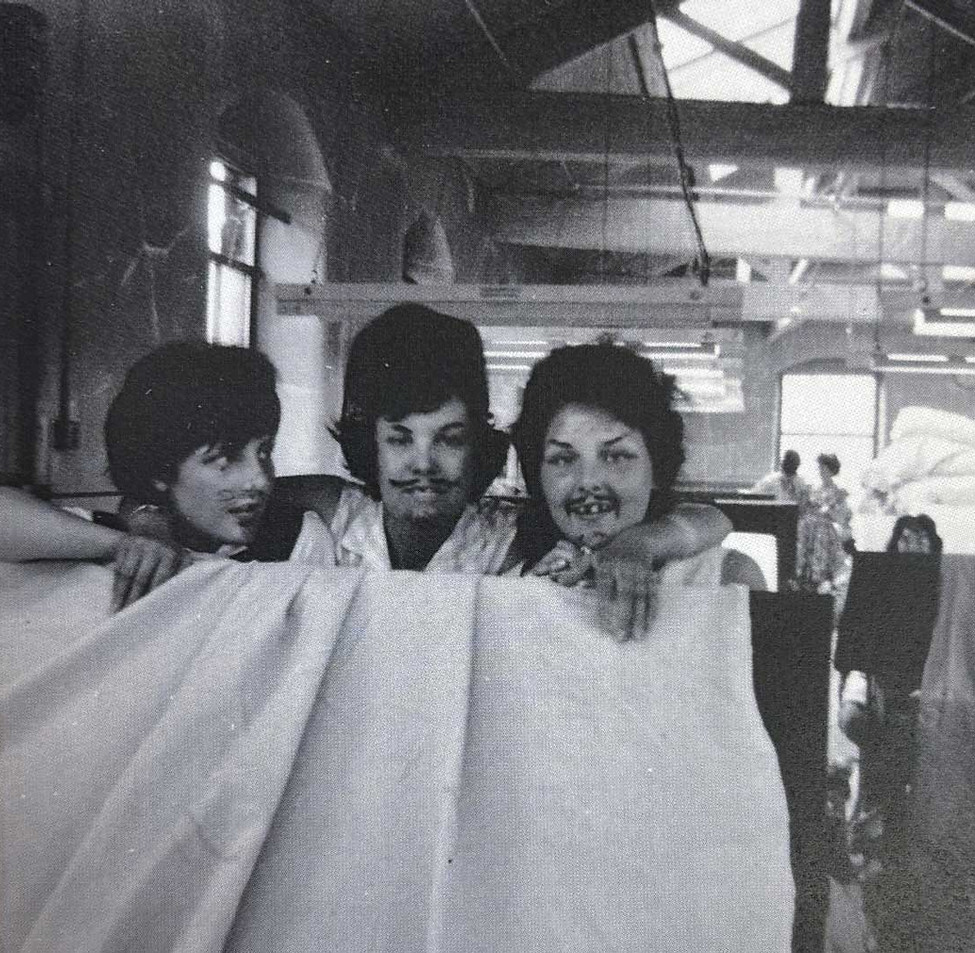
Sunny Bank Mills was a family-run business; but it was also staffed by families. Lois Carr worked in Mending Department with both her sisters; David Pollard’s father, brother and grandad all worked at the Mill; John Palfreyman Junior’s father was the Mill Manager, while his mother June worked in Mending; Anne Gillingwater’s mother was a burler/mender, and her sister and grandmother also worked at Sunny Bank; Moyra Brewster’s sisters worked, like her, as menders.
Anne Gillingwater: It was nice. Right camaraderie. All my family's worked here.
Frank Stewart Higgins: I came from school, I went to Wesley Street Secondary Modern and we left at 15. You saw a lady who asked you what you wanted to be and I said I'd rather be a farmer or a market gardener. She says, “What did your grandfather do?” I said he worked in spinning. “And your mother, what did she do?” She was a warper. :What did your father do?” He was a pattern weaver. “Have you got anybody else in the Mill?” Auntie Elsie was a mender, Auntie Alice, she was a weaver. “I think you'd be better in the mill!” Five minutes, that discussion. They were raising people to feed the mills when you think back. I didn't realise at the time.
The fact that there was a family on the ownership and management side also gave a specific character to the Mills.
William Gaunt: One of the things that family businesses can do, which other businesses can’t, is that they can be more than a money-making machine. They often have a social and emotional investment in people and community.
David: The Mill always used to run trips. Every year each department could organise a trip or there would be several departments and maybe the twisters and the warpers and the finishers all used to get together and go on a trip. We went to Blackpool on this charabanc. There was quite a lot of alcohol drunk. Graham, the young trainee, went through a revolving door and was sick over this gentleman's raincoat. We all had to chip in out of his money that we had to pay for him to have it dry cleaned. And I ended up kissing my first wife!
Raymond: My wife, I met her here. She was in the Warping Department. We just saw each other around. Started going out. “I fancy her!” - you know, like you do. And her sister worked in the Mill. She worked in the Finishing Department. I got to know her sister before I got to know her. I met Elaine and after a while, we got married. She had a baby very, very quickly - it was a talking point - it was a honeymoon baby. [We had a] son and a daughter.
Lois: Mr. Gaunt's wife, she always baked a Christmas cake for charity at Christmas. Everybody wanted to win this cake because they were beautiful. I can still see it now, you know, a really big, round fruitcake. But it was things like that that, you know, they did little bits of fundraising.
John Palfreyman Jnr: The whole atmosphere was good. Everybody knew everybody to a degree. They were all like little families, little communities.
Raymond: When I first started here, there were a lot of Italians from the war, refugees from war. Quite a lot of Italians worked in the Mill, but then as time went on, Pakistani people started working. The majority of them couldn't do enough for you.
David [There was a] character, Jim, he used to have a big, massive, metal teapot. We'd take it in turns to go down and fill it up. Jim, then after he'd finished, he'd take the tea bags out and dry them off on one of the heated bars that ran through the warping shed. And he'd reuse them again the next day!
Lois: We still went out at the end of the day, especially if it were Friday. Sometimes Thursday, Friday, Saturday. It was a good social gathering because there was always someone having their 21st birthday or an engagement or a wedding. Even if nothing were happening, we’d arrange to hire a bus and we’d go out to The Cat’s Whiskers at Wakefield and Batley Variety Club. We used to go for meals. We used to put so much money to one side, like if there were a Christmas fund and you had someone to collect the money and then you got a nice little kitty.
Raymond: I was interested in drawing and painting. There were about eight of us in the mill, and we used to bring us work to show each other. One day I said, 'Why don't we form an Art Club? We can meet together then and do some work.” We had our first meeting of Farsley Art Club, down at the Fleece tap room. I was about 18 or 19 when I started this. I'm now 87 - and Farsley Art Club is still on the go.
David: The warpers used to blame the yarn store if anything went wrong. The twisters used to blame the warpers if anything went wrong, and the tuners used to blame the twisters. [Even so] I had a good experience here, and they did look after you. They weren't awful ogres to work for. I mean, money wasn't the reason that my dad worked all his life, or me. If you're looking at a time before or just after the Second World War, people stayed in a job for life. 90% of the people that were there, certainly that I knew, had been there all their lives. [When I left] I did miss it. There’s something nostalgic about textiles, about the history. I still miss the textiles. I think it’s something built into you; you’re either born with it through your family [or not].
William: The mill community, it's a way of life that's gone now. People worked in the same place perhaps for their whole lives. Alongside their mums and their dads and their aunts and their uncles. It was a community. I think a lot of people didn't realise what it was until it was gone.

“If we carried on manufacturing, I'd be six feet under by now. It was inevitable that we had to close the business, I feel, anyway. It was the right decision. ”
When John and William took over Sunny Bank from their fathers in the mid 1980s, they knew it was going to be difficult.
William: When I started, there were probably about 120 people working here. The market was in serious decline by this stage. By the time we finished, there were about 55 people working here. But interestingly, those 55 people produced as much cloth as when there were 300. The textile trade, it's a bit like the building trade. You go from boom to bust, boom to bust. You get used to not making money every year. But it had been evident that we weren't making money for more years than we had been making for quite a number of years. One of the things that kept us going was that it was a brilliant trade in the Middle East. But it's an area fraught with difficulty, and that continues now. By the time we were handed the business, it was a real dilemma what to do with it. Obviously, you're young, you're ambitious, you're full of hope. Perhaps we can make it work? We looked at lots of things. But economics is a fearsome opponent. That’s what we were fighting, basic economics.
The Gaunts looked into many options to keep the textiles business afloat, but none would work.
We flipped from a buying scenario to a selling scenario, which was an awful decision to make. The fact that you were breaking a fantastic team up felt awful, knowing that it would never be put back together. That was the worst bit. It did feel a betrayal because of their commitment. We were just left with a pile of derelict mill buildings. And it was a decision - where do we go from here? I remember two years of personally struggling with what we had to do. We had made a commitment that we should make the best of this old lump of buildings. It wasn't clear to us at all what that was going to look like at that point in time.
We had three clear things. We'd made a really good team of people redundant. And that hurt. Lots of the mills are being turned over to apartments. {But this] meant that working community, that ecosystem was then gone from the area. So – one - we wanted it to be a place of employment. [Two], we wanted to re-engage with the local community who had all worked here. We wanted to try and preserve as much as we could of this proud heritage of ours. [Thirdly] we had to make this work for the rest of the family. We've got to make a profit, otherwise we won't be here. If we carried on manufacturing, I'd be six feet under by now. It was inevitable that we had to close the business, I feel, anyway. It was the right decision.
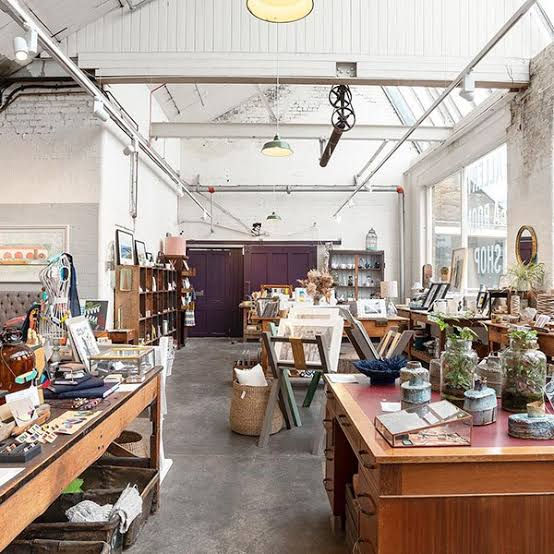

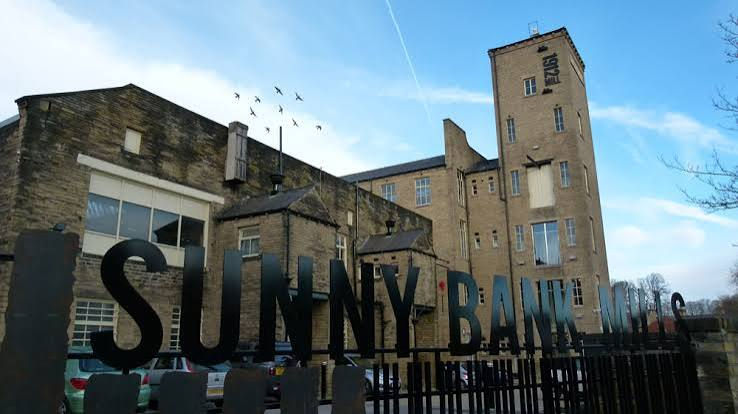
Sunny Bank became a popular filming location for TV shows like Emmerdale Farm, Heartbeat and the Great British Sewing Bee. It has also become a haven for artists.
My mum had an art studio at the end of the house. She's an etcher. She communicates to the world through her art. It was essential to her. As kids, we would go and help her in her studio. It was the reason that we got involved in arts here. We had lots of empty space, flooded with light. And, well, let's, you know, give some artists an opportunity. If it hadn't been for my mum complaining at the table, I probably wouldn't have pursued the arts thing. Handloom weaving [is] a thing I'm passionate about. As I said, we came across as weavers, donkeys ago. When we closed the manufacturing down, I thought, “Is that the end of weaving in our family? Surely not, after hundreds of years!” So, I want there to be some weaving going on here. I'm really proud of the fact that I can give artists the opportunity to have that headspace, and who are more talented than me, to get on with it.
[I have learned you have to] be resilient. You've just got to be optimistic. Have faith in people and their ideas. You’ve just got to leverage other people's energy and ideas and give them the space to make things work. I'm very receptive to people, you know, to come and have a go and see what happens. I've got one son and he's 27. I have always said to him, “It's your life. You do what you want with it. It's the only one you've got.” He may or may not come to work in the family business. Times change, and they're changing faster and faster. So, you know, the young brain and youngsters with their energy is certainly something you should be aware of. I mean, we've got a very young team working around us, it's not by accident. The ambition is that you set things up so that it's more successful once you've left. I have a few more years left in the tank!
It’s clear that William and John Gaunt have created something special in Farsley. Every worker we spoke to was hugely enthusiastic about the rebirth of Sunny Bank.
John Palfreyman Jnr: I'm absolutely proud of the lads that have done it. The Emmerdale thing was very good. The Sewing Bee is brilliant. All these artisans, the cheese and wines and the shoe shops -it's a very, very thriving community. It brought people into the village. William and Jonathan, they’re heads and shoulders above everybody, they're fantastic. I can't praise them highly enough.
June Pierce: When it was derelict, we were a bit worried in Farsley thinking it might be knocked down or made into housing estates or whatever. There's so much we've lost of the old Farsley. They took the heart out of it, really, all the old, what they call slum clearings, to build all the new buildings. So we thought, this might go. That was a bit of a worry. John and William have been brilliant. They've just resurrected it, really. I've watched them do it right from the beginning. t's been fantastic to see what they've done with the Mill and brought it back to life. It's given a centre to the village.
Despite the closure of the working mill, something of the old Mill spirit remains. Thanks to William and John Gaunt, Sunny Bank Mills remains the vibrant, creative, community space it always was.
Thank you to the whole team at Sunny Bank Mills (https://www.sunnybankmills.co.uk/) for help with this article.