


Leeds is a city of skaters. Many people will be unaware of them, but the skaters of Leeds are there, woven into the fabric and history of the city. From street races to roller disco and Roller Derby, Leeds has provided opportunities to skate for many years. Skating is a peculiarly supportive community in our city, especially for women. In this chapter we uncover why.
The history of skating in Leeds goes back to the early 20th Century, when you could have seen Edwardian women skating elegantly, wearing long skirts as they glided around the popular skating halls of the day. With the invention of teenagers in the 1960s, young girls loved to dress up for the roller disco. Lots of older people remember the Rollerena on Kirkstall Road. Many of the skaters we spoke to rediscovered skating with Roller Derby in the mid 2000s and kitted up for a contact sport that is the very opposite of genteel. Skating can be daring and scary but we discovered that there are lots of people over 50 who still do it – and encourage every generation to take part.
Speaking for myself, I was very excited to be given a pair of adjustable metal roller skates with red leather toe straps for Christmas in 1960. I learned to skate on my own on our concrete drive. Paving stones sound great on roller skates making a clickety click sound a bit like a train. Sometimes I would try to beat a bus as I skated along the pavement. I loved the noise of our wheels on the wooden floor of the wrestling hall, tearing along the edges of the room then going round and round circling holding hands with a friend. Since then I’ve had 2 knee replacements – I think my skating days are over. But it was a huge pleasure to meet such an interesting variety of skaters to hear their stories.


The early 20th century saw a brief skating boom in the UK. Leeds was no exception and curator Catherine Robins, a skater herself, was keen to uncover more about these Edwardian skating rinks.
Catherine
One of the treats of working in a museum is that occasionally you can just get a little bit distracted by some research about something that maybe isn't your top priority. I’m working on a project around sport at the moment, predominantly focused on improving our content and collections. As part of that, I was doing some research connected to things in the collection; and we have some roller skates. I also was a roller skater and was quite taken by it. I didn’t know anything about Edwardian roller skating - I didn’t know that was a thing.
For centuries people have been ice skating. When roller skates get invented, the excitement was that you could do it all year-round. It was between 1907 and 1911 that it blew up and then blew down again. It was across the whole of the UK, it wasn’t just particular to Leeds. It spread from Liverpool outwards. There was a guy who had opened some roller rinks in America, and then he expanded it. He partnered with a British businessman and they opened rinks in Liverpool which were successful, and then they started popping up across the country including in Leeds. It was really popular; there are newspaper articles at the time referencing this new craze taking over Leeds; it really blew up very quickly. There were five rinks in total across Leeds: there was one in Headingley, one in Kirkstall, Oakwood, Chapeltown and Hunslet. A lot of the research that I did was trying to find out where the rinks were.
As for who went, I think it was everyone who could afford it. Charges were a few shillings. They put on sessions with special prices for women and children. The postcards show women wearing long skirts. They weren’t down to the wheels because I guess the risk is that they would tangle up in the wheels. It looks like quite a gentle way of approaching skating, skating very cautiously.
Age-wise, it was quite a range. It was a way to meet people. One of the anecdotes I found was of a woman with a chaperone. That chaperone might be an older person who maybe hadn’t learned to skate so well. So the rink was a great opportunity to get away from your chaperone. It was a very social space - they had live house bands playing; they had shows as well, acrobatic shows and people showing off their skating skills. Part of the advertisement was the ball bearings that they had - so part of the reason for the craze was that there’d been the invention of the ball bearing, which meant that the wheels on the skates could roll better and they had a nicer experience.
Different companies owned different rinks. That’s where the impetus to have house bands and special offers on Saturdays and all these performers came from - you can try and convince people [to go to that rink]. Presumably people were willing to travel to places that had a good price or a good performance.
I haven’t found anything that explicitly explains why it petered out. I think that part of it is just: that’s the way it is with crazes - people get very excited, and then it drops off.
Most of the rinks got repurposed to start with [after they closed down]. It’s not always clear exactly what happened to all of them. It looks like the one in Headingley was on St. Michael’s Lane; but, annoyingly, the building that’s there, I think it’s probably the skating rink, isn’t labelled. That one was repurposed as opposed to demolished. The one in Hunslet is now part of City College. The one over Potternewton way, I’m 90% sure it’s been demolished. It’s all housing now. I think the Kirkstall one was around where the retail park is now. Or it’s a couple of roads over. Others have clearly been demolished and eventually housing has been built on the site.

A Leeds City Tramways tramcar advertising the Cycling School and Skating Rink on Milford Place, off Kirkstall Road.
© Leeds Libraries

"SKATING WAS A WAY TO MEET PEOPLE. IT WAS A VERY SOCIAL SPACE. THE RINK WAS A GREAT OPPORTUNITY TO GET AWAY FROM YOUR CHAPERONE."
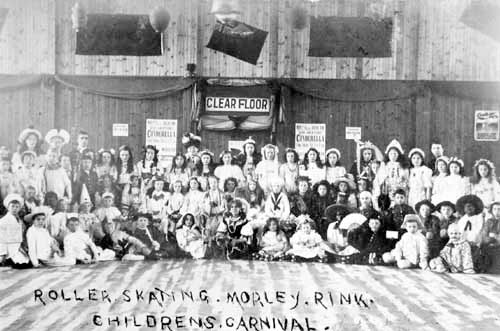
A roller skating event at Morley Skating Rink during a Children's Carnival sometime in the early part of the 20th Century.
© Leeds Libraries


Silver Blades opened in 1962 as an ice rink. It only last a few years until it closed down and got turned into a roller-skating rink. But for that brief time, ice skating was a popular activity for lots of young people, including Maureen Kershaw.
Maureen
I always loved watching ice skating on TV as a child and the annual snowfall would have me trying to skate on any patch of ice in my wellies. I couldn’t wait when ‘Silver Blades’ opened in Leeds. Most times I went alone, going downstairs to the Skate Hire and exchanging my footwear for a pair of brown boots which I hated. Once I convinced Mum and Dad that it wasn’t just a flash in the pan hobby and I would stick to it, they took me to Spalding’s sports shop on Albion Street, where Waterstone’s is now. In the window was a pair of lovely white leather boots, with brown soles and heels and shiny silver blades. My own ice skates! I remember that night standing them up against my bedroom wall to admire and I could barely sleep with excitement at the thought of having my own skates to wear.
I loved to go the Ice rink on a Sunday morning and would proudly catch the bus from nearby Burley with my lovely white boots either tied together or slung over my shoulder. Alighting from the bus on Burley Road, the latest pop songs could be heard from the rink’s large open windows. To this day if I hear “Speak To Me Pretty” by Brenda Lee, I am transported back to crossing the grass in anticipation of a morning’s skating.
I was 15 and working at Thrift Stores head office in Kirkstall. The other post-girl I worked with was a keen skater. Margaret and I went skating two or three times a week - including morning and afternoon sessions on a Sunday. In between the two we would enjoy egg and chips in the Grill & Griddle which overlooked the ice. Going with Margaret to ‘Silver Blades’ meant I could share her locker, so didn’t have to go to the public changing rooms. I chatted to the other girls, admiring their lovely skating attire. One girl I remember appeared to spend as much time applying her make up and doing her hair as she did on the ice.
One of the instructors I remember was Wendy Paton. I was very much in awe of her beautiful white anorak, which she skated in! During the public sessions the music played was usually the latest pop songs but was interspersed with music played by the resident organist, smartly dressed in his royal blue blazer. The tempo would slow somewhat and skaters with their instructors would practice their ice dancing. It all looked so elegant – and easy – which of course was far from the truth.
Each public session saw a long area of the ice being reserved for those having a lesson or practicing their skills afterwards. I could only watch in awe of sit spins, teapots and triple salchows. My mum always feared that I would break a limb or fall on my head. I did survive but was extra careful if I did fall, in moving my hands so that no-one skated over my fingers.
The final records played leading up to the end of the session were very much up-tempo, and as the ice cleared just a few of us would remain, which gave the opportunity to skate round at speed. By this time the ice would be churned up to a snow-like consistency with large patches of water, great for skating through. But, oh, if you happened to fall you certainly knew about it! It would be then time for the tractor type machine to be driven round the ice to skim the surface and prepare for the next session.
Occasionally there would be live bands. I remember seeing Georgie Fame and the Blue Flames. Tickets were 5 shillings and sixpence, which I assume we bought in advance. The artistes would set up their stage by the organ. I still have Georgie Fame’s autograph from that night.
It was a very sad day when ‘Silver Blades’ closed, to be transformed into the ‘Rollarena’. My skates were surplus to requirements and it was back to hiring the roller boots. I think I only went to the roller rink twice. Gone was the lovely swishy noise of steel skates on the ice, being replaced by a thunderous sound of all those wheels on the wooden surface. Only the exterior of the building bore any resemblance to ‘Silver Blades’. For me there was no excitement to roller skating – something was definitely missing. Yes - it was the elegance and glamour.

Brochure for Silver Blades, Leeds, April 1965
© Leeds Libraries


Fondly remembered by Kirkstall residents, the Rollerena was more than a roller stating arena, it was a social hub. Some of the following extracts are from members of HOPS, an older people’s support service in Hawksworth.
Amanda
I've got three older brothers and they all used to go to the Rollerena. I was quite young but remember putting a set of skates on and holding on to the side. One of the big displays I remember is when three or four people would start spinning in the middle and other people would join in and then it would be this big line of people all skating round in a circle. Those towards the end must have been going, I hate to think how many miles an hour. That was always a spectacle to watch. Once one person fell, that was it. As kids we used to always tell stories that you should only go to the Rollerena, not the ice-skating rink, people drown when it gets hot - because all the ice melts. For donkey's years I believed it and used to repeat it to people. Apparently four people have died drowning!
Barbara
I used to take my nieces. And for three Saturdays, we really enjoyed it, and I was just starting to find my feet. And unfortunately, somebody did that thing, I don't know what they call it, but where they all join hands, and they go faster and faster and faster, and it frightened me to death. I never really went back there, because I preferred the roller skating up at Armley Swimming Bath. They used to cover the swimming bath up, and they used to have dances on the Saturday night on roller skates.
Margaret
I used to go, but I couldn't skate properly, I could only go from one side to the other. I never went ice skating, it was just roller skating, you know, doing the best I could.
Chris
I used to go down there on Saturday mornings. It would have been somewhere between ‘67 and ‘69. What I remember most is the way I was dressed. In ‘67 I was 13 and started to get interested in clothes; I chose for myself a pair of banana yellow jeans. And it was the era of the shirts with the big, rounded floppy collars. A satin-type shirt like that in purple and then a v-neck sweater in orange - that was my outfit for going down there. Which is as abundant a fashion crime as you can imagine! My experience of roller skating before that had just been on the street. But going down there opened things up a lot. I learned how to skate backwards, I was useless in the speed skating but you know for a couple of hours every Saturday morning it was fun. You rented the skates, you wouldn't bring your own. I don't know if I went down with anybody, quite probably not. I'm an only child, very self-sufficient. And I don't recall getting to know anybody down there. It was just a brief craze. It was two years at most and possibly less than that. Certainly by 1970 it was history for me.
Diane
Every time I went, I finished up with a bandaged arm or a bandaged leg. But I really liked it. I used to go practically every Saturday with my friends when I was a lot younger. Met quite a few friends there, and I think I met one of my boyfriends there. I just got friendly with such a lot of people, you know.
Paul
I never went. There were an awful lot of scare stories going around about teddy boys and skinheads. There was one story about somebody getting their penis nailed to the floor. So you kept yourself away from it. I did know people who did go. It had a bit of a reputation.
Veronica
We used to just go there every Saturday. And it used to be really good. You know, we had some great times. It was just a Saturday thing, what we all did. And we all went, all my friends and my family, everybody that wanted to come. And we all used to go and have a nice day there. I didn't actually like when it were ice skating, because it was too hard work. But the roller skating were really good because you could keep on your feet with it. My mum died when I was two years old. So my dad didn't have a lot of money. And there were five children. So it can't have been expensive. Because we wouldn't have been allowed to go. Because nobody had any money in them days. So it was like a real treat on a Saturday. You met people and you made loads of friends. And you saw them every Saturday. It was a social thing. It made the weekend.


When the Rollerena closed, there wasn’t a skating arena in the city for many years. But for one young man, this was his coming-of-age…
JoJo
I started skating, I would say, 1977, 1978. I started skating indoors, in the kitchen. My brother’s skates. When I first started skating. I just wanted to skate in the kitchen. I didn't know what was next. Because there wasn't nothing out there to follow. There was nobody skating. And then there was a video out. It was a roller disco video. This is way before John Travolta. So you watched a bit of that. But for me, it was watching the figure skating. And I copied the figure skating. Down to a T. On the Olympics. With my VHS recorder. And that's how I learned to skate, copying the figure skating. When I got that all covered, that's when I went outside. I didn't go outside prior to that. Going outside, I didn't know what to expect. And from there, I was hooked. I was on my skates all day. From six, seven in the morning, until two, three the next morning. Nightclubs, blues. For all those who don't know, Blues - that's a shebeen. That's a party, a place where a lot of the black people went to enjoy themselves. Back in the day, racism kept you away from certain places. So the community kept together. I'm in the blues, I'm in parties, I'm going to school, I'm going to nightclubs. I'm skating to school. I'm roller skating to school, I'm skating back to school. Everywhere I went, I'm on my skates. I’m about 15, 16.
There was a posse of us, about ten, fifteen of us. And we got together skating, down Gaythornes, around that area. We went to Sheffield, a small group of us went to Sheffield and Bradford. We went to Bradford, Green Lane in Bradford. Every Sunday we went to Bradford or we went to Sheffield. Didn't miss a week. That lasted for about 3, 4 years, 5 years. Then everybody got on with life. I carried on skating.
I thought, I might as well open my own roller-skating rink. And skate on my own. There was nobody else to skate with. At the time, there was nobody else to skate with. It didn't bother me. So during that period of trying to find my own rink, I went market researching to other rinks. And that took me all over England and parts of Europe. So London, Derby, Manchester, Salford, Rotherham. You name it. I went all over looking at other rinks. So I could take ideas. So I could employ it in my own rink. If and when I found one. It was difficult trying to find your own skating rink. So I carried on skating all over. All over the world. India. Thailand. Jamaica. All over Spain. Madeira is difficult. It's very volcanic and hilly.
At that period, I wasn't looking for other skaters. Because there was no other skaters. Unless you went to America. There was no other skaters. In the north of England, basically. Manchester, Salford, Rotherham. They had their own little skating rinks. Like community rinks. But to go to a roller disco, there was none of that. Then in the 90s, at the bottom end of town, there was a roller rink that opened. With in-liners. And that was called Speed Wheels. But you couldn't get into the roller-skating rink because the queue was that long. And anybody that went in, stayed in. They weren't coming out. So they paid extra money to stay in. You have to go down there the minute you finish school. Straight down. Queue. And hopefully you got in. But that closed down after about a year.
Then it was back on the streets. Skating with the posse. And there were just a handful of us. Maybe 5 or 6 of us. We used to go to a place opposite the Crucible in Sheffield. It's a bingo hall now. But they have a nice wood floor. Some people thought that we were pimps. Because we had bracelets on. You know what I mean? Come on, please. And then that died down. I kept on skating. I didn't stop. Because for me, skating came before Man, woman and child. As long as I had a Twix, Mars bar and some chocolate. As long as I had my chocolate. Right now, it's all about skating. Skating, skating.


When I first started skating. I just wanted to skate in the kitchen. I didn't know what was next. Because there wasn't nothing out there to follow. There was nobody skating. And then there was a video out. It was a roller disco video. This is way before John Travolta. So you watched a bit of that. But for me, it was watching the figure skating. And I copied the figure skating. Down to a T.
For me it was transport. I was getting out. I was having fun. I didn't realize my development. I didn't know how good I was. Or how bad I was. It's only when I went to London one time. And they said. “Are you from America?” And I showed them my posterior. I said no. I was going to these places to learn. I wasn't going there to show off. I was going there to learn. So I'd go on the roller-skating rink. And start flexing. And then everybody would come off the floor! And disappear! We didn't know our potential until we got other places. And when we got there, we thought, “How rubbish are these people?” You've got a rink. You've got wood floor. You've got all these facilities. We're coming from broken glass and stones!
Skating was frowned upon by a lot of people to say well. The roads were smoother back then. I'd skate from Armley to town. Hyde Park, Woodhouse, Roundhay Park. All on the roads. Smooth. You can't do that now. If you follow a smooth route, it might take you 4 or 5 miles outside. Where you're going. If you're following the smoothie. I spent a lot of time with my kids while they were growing. My kids would be on bikes. And I'd be on the skates. None of them could keep up with me. I don't know why!
You just don't know your own ability. It's only when somebody says, “You're good at doing that. And you're good at doing that.” And then eventually you realise: I'm good at what I'm doing. So I just have fun. Continue skating. Just watch other people develop. I help other people. I just have my own style. I stick to my own style. I look at other people. I look at TikTok. And I think, that's rubbish. But when I see a good skater - props.
I'm arthritic in my left knee. But it's to the point where I can still skate. To a degree. And still do my moves. I customise my moves now. My moves are customised. Around my knee. I'm still spinning, looping. Jumping, twisting, dropping. Splitting. Pole dancing. Basketball. Football. High jump, long jump. The full shebang. High jump. In Sheffield we used to do high jump. We used to do the high jump. We used to do the long jump. About 8 tyres. I didn't go for no record. But it was about 8 tyres average.
I do salsa. On the skates. I go salsa classes on them. I don't do any dancing on my feet. Them days are done. It's my skates. I go on nightclubs. If it’s ok to put my skates on, it’s fine. If not I'm not really entertaining it. When it comes to age, I ain't bothered. Even if I wasn't fit. Age don't bother me at all. I've got a small food business. I deliver my food to the customer. The customer says to me, “Jo Jo! Don't you think you're too old to be roller skating?” I'm on my skates – no!


The Roller Derby phenomenon encouraged lots of people – especially women – get involved with skating. Nowadays skating is huge in Leeds and these stories reflect that amazing community.
Len
I lived on a hill so we would skate down … and it was just luck whether you kind of survived at the bottom! I skated a little bit in the 1980s - there was the roller disco-boot craze. [Mine were] blue suede and stripes down the sides which I loved. I thought I was really good at skating them on the tarmac outside my house.
And then I didn't skate until I was an adult. It was kind of by chance that a friend of mine came to visit me. I'd I just had a baby. She came to see the baby and she was talking about this new hobby that she'd started. She was going roller skating. “You should come it's really fun.” I was quite confident - I can already skate. So I went and then I very quickly realized I couldn't skate! [It was] a lot harder than I thought. But it was so much fun. Seeing a group of women - they weren't young people, they were adults - all kind of learning this new thing at their own pace. It was really exciting. it was very much female-led. It was so refreshing from coming from the skateboard community which was very much male-dominated. It felt so refreshing. Led by a massive group of women which was really amazing.
The actual sport of roller derby did slightly terrify me because it's quite brutal. I did it for a while because that at the time was the only form of skating I knew. After a while of doing that, I realised it wasn’t roller derby that i loved, it was the skating. There's other forms of skating. That's when we branched off a bit into learning the dancing and stuff like that.
I think it's just one of those things that people should try. When I used to do things in public, we would have a lot of people come up to us and be like, “Oh, I used to do that when I was young and I’m too old now.” Well, no you're not! What's stopping you? You're never too old to have a go. The good thing is that anyone can skate; it doesn't matter what size you are. You really push yourself, you switch off from everything else [and] you focus on this one thing. I think skating is a bit like that. You could choose to go at speed - you're so focused on not falling over and hurting yourself, everything else kind of falls into the background. That satisfaction of achievement when you finally do something that you've been practicing over and over and over again…when you finally do it it's like “Oh!” This massive wave of exhilaration comes over you … achievement, pride in yourself and self-satisfaction. But also that kind of element of freedom.
There's lots of friendly people lots of patient people who are there to teach you and will really encourage and support you i think that's the best kind of thing that skating brings out in people. I don't know a lot of skaters who are really selfish. Most of the people i know want to share the experience.
I run an after-school skate club in my school which has been quite popular. They pick it up straight away, no problems, no fear. Potentially it's the first time they've had a chance to ever try it. You get the odd person who really is quite nervous and needs a lot of reassurance. What I find really satisfying is they come back week after week. We keep trying and build that resilience - they're not going to give up. I'm really proud of them.
There's a lot of types of roller skating that I have done in the past that I can't claim to do anymore because I've got a bit older. Lots and lots of injuries, even just if you're kind of trying to be quite careful. Outside you can trip over a tiny little pebble and have quite a nasty injury. Breaks, cuts, abrasions, bumps to the head. I would always advise wearing padding and a helmet. Anyone who's starting out I'd advise to wear protective equipment.
It's given me a lot of opportunities. I've travelled a lot, I've met so many people from around the world. Different types of people from different walks of life that you probably wouldn't normally come across in your day-to-day life. It makes you feel a bit physically stronger. A bit feel a bit stronger mentally as well. I used to be a lot more shy and I wouldn't interact with many people. It's given me that extra confidence. It crosses boundaries. There’s a festival every year in Barcelona called Skate Love festival. There's people from all over the world. Skating transcends a language barrier. You don't need to be able to speak the same language. That really makes you feel like the world is much more open. You go anywhere in the world and you go somewhere where people are skating, you would be welcomed.


"it was so much fun. Seeing a group of women all learning this new thing at their own pace. it was very much female-led. It felt so refreshing. Led by a massive group of women which was really amazing."
Machteld
I never skated as a kid. I started skating in Amsterdam, one of the most populated cities in Europe. I tried to find a hobby; everything had a waiting list. Sewing class - waiting list. Hockey - waiting list. I really wanted to meet people. I tried to sign up to ballet - full. But there was one space left on a beginner's roller dance class. And I was like, well, beggars can't be choosers. So I signed up. That's where I learned how to skate. And I loved it. I did a lot of outside skating around the parks in Amsterdam. But it wasn't like my life at that point. It was just a hobby.
My story in Amsterdam didn't last very long. I left and I didn't skate for another two or three years, until I found myself back in the UK. I had to move to the north - a new city - and I started my journey again. I started to learn from Len. Len taught me a lot of the stuff I know. [She] made it really fun. We've been really good friends ever since. That's when I got the community going.
The Skate Scholarship started in 2021; we started with running free sessions in Cross Flatts Park, roller skate sessions. We wanted to make roller skating more accessible because a lot of skating is really expensive. The roller skates, the equipment, the lessons - people couldn't do it. We wanted to make it more accessible, especially for young people. We would take people's old skates, they would donate them to us and we would just fix the skates up and give them out. We run something called Skate Scholarships, which basically is a free six-week course for young people to learn how to roller skate. [Skating] is often seen as a little bit rebellious, so young people who might not engage with PE or traditional sports, might give it a try.
With skating, the good thing about it is that it attracts a whole range of people. Because even though it's a sport, it's also an art form. And it's also a leisure activity. So it's got those three elements to it that attracts different people. You’re doing something fun and exciting. So I think that's what makes people connected with it. And that's why I think the community is so strong because we are from all walks of life. We are from completely different communities, backgrounds, demographics, and we all just gel. It feels really inclusive.
So for me it's the freedom it gives me. You are only in competition with yourself and with your own skill. You can have a good time and there's no pressure to do it right or to do it this way, you just kind of all connect.
I actually did roller skate lessons [with older people] at HeyDays. I had a 96-year-old on skates. He was like, “I've always wanted to try this since I was a kid but I could never afford the skates - oh hell with it, let's just try it!” They did it - we had no accidents no broken hips and it was really good. I think most of my friends are over 40 in their 50s, all skating. It's not something that you just stop doing, I think you just maybe do it slightly differently.
Nearly two years ago I had a life changing injury. About a year and a half ago I was not really able to walk. My goal was to skate again. A lot of doctors told me, “I don't think you'll skate again” but I was so adamant. Skating is so good for your body because it doesn't have the same impact on your joints as running. I can't believe I got myself back to skating. I can't skate in a skate park anymore, that's something that I will never be able to do again - but I can skate on the flat ground and that's been amazing. I just love to skate - and I think that's the long and short of it.

Kerrie
I started roller skating in about 2008. I'd done it as a kid for years. I used to go to Armley Baths and they used to have an old roller disco there. Many, many years ago. But then I got back into it as an adult. A guy called John Kirkham ran a roller disco at a comedy club in Leeds on a Tuesday night.
So I bought myself some cheap skates. He created a Roller Derby team. And I used to train a couple of times a week. And we played bouts…it's like a league. I finished that because it was just too much, with work and the training. I just stuck to roller disco because I loved that. My friend ran a group and we were going every week, to improve our skills and work with other people that were new to skating. And
I had my little girl. She was six months old and I broke my leg while I was skating. I did a really basic move that I do time and time again. And I broke my leg. So I was out of action for quite a while. And getting back to, I was terrified I was going to fall again. So what I tend to do now is I skate in the park with my little girl. And I skate in the kitchen. Because I'm terrified of going to public events and breaking my leg again.
I'm 49 this year. And I think, oh bugger it. I can do it. Why can't I do it? Why do I have to be 19 years of age to go and skate? Anybody can do it. I love the group thing of it. I love the fact that it's like a little family. And you all kind of look after each other. And you become amazing friends. I have people that I did roller derby with 16 years ago that I am absolute best friends with now. Really, really supportive.


One of the newest skating communities in Leeds, the Potternewton Rollers was set up in the Covid lockdown for people of all ages to enjoy skating.
Marcia
I'd seen that there was some roller-skating lessons being run down at the Ramagarhia Centre. And I said to my sister Julie, “You want to come? Let's do this.” Julie and I did a few weeks, and then we brought our kids. We just continued skating. Then COVID hit. It was a time when they said you couldn't go out. They said can go outside and have physical exercise. So I said to my sister, “Shall we go skating?” Just in some of the streets. And Julie's seen a couple of her friends and they're skating as well. They suggested going to the park. There were other people there who were skating, individuals, we all went every day. And as people saw us in the park, more and more kept coming. It just kept getting bigger and bigger and bigger. And then we wanted to go inside. So one of the people that was skating with us, Robert, spoke to a local centre down the road. He said if we can get ten people together, it's going to cost thirty quid for the hire. And we did that. And not only did ten people come, but a lot more people that had been met in the park came. That's where officially we started as Potternewton Park Rollers. And we've just got bigger and bigger since then.
Sam
Basically Jo Jo says to me, “You know there's loads of people skating in the park. Why don't you get your skates and come down to the park?” I didn't know how to skate very well. The skates had sat in the cupboard. I hired these skates for £5 for the event. It was the last one. He said keep them. They sat in my cupboard for about 10 years. 15 years. I couldn't come when he first said it because my son was too young. I couldn't leave him long enough to go to the park. The year after I went down and spent about an hour leaving him for about an hour at that point. I tried to bring him but he wasn't interested. I loved it. Those first years I would go home buzzing. I loved it but every time I put the skates on, I felt more fear of God about everything. I was like, why am I doing this? Why am I doing this? But there was progress every time. I just felt something. Then I bought myself a better pair of skates and met these guys and we all started hanging out. Then we started skating inside and all of that. We're all over 50!
Julia
When people come to our sessions we get them padded up and we say to them falling is a part of it. To get rid of that fear. And once they get past that fear then they start to enjoy it more and realise what I'm being fearful for. Because they've got past that fear of falling and I think that's the biggest fear as adults returning to skating or as adults who've never skated is the fear of falling and breaking something. Which is very very rare. But you will fall.
Maria
It's just a feeling of freedom. I think. It clears your mind. Because when you're on your skates because you're moving all the time and you're learning different things you haven't got time to be thinking about other things. Because you're thinking I want to go to that next level or I want to improve what I'm doing now. So you're thinking about what you're doing in that moment. So you're actually in the moment when you're skating. And when you're in that moment you're not thinking about nothing else apart from doing what you're doing in that moment. So it relieves you of thinking about the future thinking about the past. It's almost like that bomb in your brain. It can give you that clarity in your brain because that's literally all you are thinking about.
CONCLUSION
After over 100 years, skating in Leeds is still hugely popular. Why? We went back to our first interviewee, Catherine to ask her why she things skating is so huge. “The physicality of it is really satisfying,” she told us. “You're constantly learning new skills and improving.” It’s an inclusive activity too. “It's a very body-positive sport. It lets you celebrate what you are able to do with the body you have.”
Perhaps more than the physical element is the mental part, what Maria describes as that “feeling of freedom.” Many of the skaters we spoke to echoed that sentiment, the idea that skating, just for a few moments, frees you from your day-to-day worries and anxieties. Being part of a supportive community is really important and all the skaters we spoke to agreed. And as Kerrie said, “It's just really good fun. Dancing on your skates. What more can you want in life?”
Thanks to Skate Scholarship, Potternewton Rollers, Yorkshire Dance, HOPS.
Thanks to Catherine Robins and Patrick Bourne at Leeds Museums & Galleries
Original photos by Jamie Hutchinson
https://www.theskatescholarship.com/