



Over the centuries, people from around the world have made Leeds their home, creating communities centred on shared spaces and buildings. Three foundation stories from three diverse communities.
Over centuries people have come to Leeds from all over the world and made this city their home, their community. When they establish that community, what do people need? Partly, it’s about spaces they use to get together, the buildings they meet in. It could be a communal kitchen or a school, a place of worship, a café or a launderette. It may be a building that had a former use, a church that became a synagogue; house that became a community centre; a shop that became a meeting place. You may have walked past a building many times and not realise the history it holds. In this chapter we uncover some of those foundation stories.
Firstly we go back to the 1930s and uncover how a house in Chapel Allerton was transformed into a refuge for Jewish boys escaping the Nazis. Then we skip forward to the 1960s when the very first Sikh Gurdwara was opened in Leeds, on Chapeltown Road. Finally we discover how in the 1990s a group of Muslims decided to support the elders in their community; starting in a small shop, the project they started is now the thriving Hamara Centre in Beeston. Leeds is a rich, diverse city and is home to over 160 different nationalities and a huge variety of foundation stories. What stories do these buildings tell?


FOUNDATIONS: THE JEWISH BOYS’ HOSTEL
By Ruth Steinberg
This is the story of a forgotten building – and of two boys who lived there. In the late 1930s a hostel was established in Leeds to house boys who had come to UK as part of the Kindertransport. The Kindertransport was the organised rescue effort that allowed around 10,000 mostly Jewish children to come to the UK, fleeing Nazi persecution in mainland Europe. The Jewish Boy’s Hostel was based in Chapel Allerton and, whilst many boys lived there in the 1930 and 40s, it has largely been forgotten. We were alerted to the story by talking with Helen Frais, a Jewish writer and playwright who has lived in Leeds all her life. She knows her way around North Leeds and had walked around the area many times not knowing that one of the houses she passed had a significant history.
Helen Frais: I worked in the Jewish community for many years. I heard a story of a lady who was French, living in Paris. In 1942, aged just six, her family were rounded up: a story of terror and courage. I researched this story and wrote a play. During the creation of this play somebody said to me, “You’re obviously interested in children and the Holocaust. Do you know about this hostel?” I said no. I asked lots of people, and they didn't know.
Helen started investigating the story further and connected with people whose relatives had lived at the Hostel. She tried to work out exactly where the Hostel was located.
I went down to where I thought the hostel would be. It was a road I had been down many times. I saw some writing on the gate post, and I'm looking down along an alleyway. I had a photograph [that showed] a white huge door with ivy growing round it. I couldn’t see anything, but then I went down the side, down the alleyway. There was a cream house. And the door was open. I knocked and a lady came to the door. Over a cuppa, she told me what she knew. She wasn't Jewish but her research showed that it was a Kindertransport hostel. She took me around the back of the house. And there's this beautiful big garden and when I turned round, there's the big white door and ivy growing around the door, just like in the picture.

"My parents told us that we should be honest, that we should, if we get jobs, work hard at them and make the best out of them. But the most vivid memory I have was my father telling to my brother, look after Richard."
Helen found out that of the thousands of children who escaped the Nazis, many were sent to Leeds and the north of England. There was a hostel in Harrogate for girls. In Leeds there were around 90 boys who lived in the Hostel.
This is how I came to write a play that imagined what it may have been like for children, separated from their parents, escaping a terrifying situation.
Helen’s research focused on two brothers who lived in the Hostel: Richard and Joseph Feiweles. Richard was born in 1924 in Breslau, a city that was then part of Germany and is now Wroclaw, Poland. Richard was the second son of Kurt and Else Feiweles. Whilst both brothers are no longer here to tell their stories, Richard’s daughter Diane Fairfax was keen to share what she knew. Diane had already helped Helen with the research for the play and was more than happy to meet us and tell us more about the Richard and Jospeh. Diane confided that her father Richard was very open, talking often about his childhood in Breslau before the war and how he came to England. Diane and her father used to go into schools together to talk to schoolchildren. They felt that it was very important that the stories about the Holocaust are told. Children need to know about what the Holocaust means for today and the lessons we need to learn about the consequences of hatred and racism. Diane continues to raise awareness many years after her father’s death. Diane told us how her dad came to be in the UK. She starts by describing the context for Jewish people in Germany in 1938.
Diane Fairfax: Hitler's rounding up all the Jewish men. My uncle goes to the station to meet his dad off the train and sees him get arrested. So he has to go home and tell his mum and his brother that Dad's been arrested. They don't know where he's gone, they don't know how long he's gone for, whether he'll be seen again. After about four days he comes back. He’s able to come back because he's signed a piece of paper that says he'll leave [Germany] within a month. And he knows he won't. He knows he can't. He knew if he didn't sign it, he'd never see his wife and kids again. So he signed it - which is why they were eager to get the kids on the transport.
Diane revealed that at her suggestion, Richard told his own story. He recorded several hours of audio tapes all about his life and was later interviewed by the USC Shoah Foundation, an organisation established by Steven Spielberg that was dedicated to recording and preserving testimonies of Holocaust survivors and witnesses. What follows is from those two sources.

"It was a very big house with a lot of rooms, and it was ideal to make a hostel. All the lads from Breslau moved in the top room. They tried to keep us with people we knew, which was a good idea, because we soon made friends."
Richard Fairfax (1924 – 2004): When I was cycling to work, I just turned the corner when I saw our big synagogue ablaze. In England and in Holland they were starting committees to get as many children out of Germany as possible and after arguments with the British Home Office the Home Office admitted agreed to admit 10,000 - or just over that - children from Austria and Germany. The committee in Breslau decided that [they could allow] only one child per family - that was my brother Joseph. If they were any subsequent transports, they would consider brothers and sisters. 48 hours before the transport was to leave, a committee member came to our house and says, “One of the lads that was on the transport has decided to go with his parents to Shanghai. They just received permission to go to Shanghai and there was a vacant place and they want to fill it - so could she get me ready to join my brother in 48 hours?” So my mother said straight away, “Of course!” A lot of rushing about to be done, a suitcase to be bought and what-have-you and I was there on the transport.
I left Breslau on the 30th of November 1938. My parents told us that we should be honest, that we should, if we get jobs, work hard at them and make the best out of them. But the most vivid memory I have was my father telling to my brother, “Look after Richard.” He was very concerned about me because I was, I admit it, I was a bit of a devil. And I wasn't interested in schoolwork.
We went to a camp in Dovercourt in Harwich which was a holiday camp owned by Warner’s - they loaned it to Jewish refugee organizations. Joseph and I were in the same chalet - we played football and [we were] running around. One day a guy who was called Mark Laviewicz, he was the managing director of Darley Mills, they had formed a committee in Leeds. They were going to open two hostels: one in Leeds for boys and one for girls in Harrogate.
A few weeks later, the brothers travelled up to Leeds. After a short stay in a hotel called Adelman’s, Richard and Joseph found themselves in the Hostel.
It was a very big house. Somebody that lived there was not a pauper. It was a very big house with a lot of rooms, and it was ideal to make a hostel. And it was big grounds. There was a front cottage where there were one room up and one room down. All the lads from Breslau moved in the top room. They tried to keep us with people we knew, which was a good idea, because we soon made friends. I already made friends with some other lads from Berlin that shared a little bit of football with me. And there was a front cottage and a back cottage, but the main body, I think again in the back cottage, was one downstairs and one upstairs room. But I would imagine in the old days, whoever owned that house, whoever lived there, maybe the gardener or servants used those cottages. The sleeping arrangements were proper beds. I think there were three and four to a room. But they were quite large. It was well chosen by the refugee committee, of which Mark Laviewicz was the chairman. Those who wanted to played football, and table tennis. I believe we had a dart board as well because kids started playing darts in the holiday camp. We had one teacher. The main lessons were learning English.
At first, we used to get mail regularly until the war broke out. Then we got it very slowly, writing to friends in America and enclosing letters from my parents and vice versa. Mainly, they were in good health. If they weren't, they wouldn't obviously bother us. To keep us cheerful, to keep us content, to keep us happy. They wrote back and enclosed the letters to us. That stopped when the Americans entered the war. Then we relied on messages, which came from mainly one of my aunts, who was registered as a Pole, still living in Breslau.

The last one we got was in 1941. We knew what the message was going to be because we knew things were going on. It just says, “Parents gone on a journey. Love, Cecile.” And that was it. [We understood] they were transported to a concentration camp. When they transported the early Jews to concentration camps after Kristallnacht, we looked at it as forced labour. The Final Solution never entered anybody's head in England, that they are there to murder them. I found out that the first transport from Jews out of Breslau that my parents were on were transported to a place in Riga, Latvia. The camp wasn't ready and they just shot them all. The whole transport, I don't know how many there were. They all got shot.
After leaving the hostel Richard stayed in Leeds and got a tailoring job at Burton’s. Later, he joined the British Army, at which point he changed his surname. Here’s an extract from a military history written by his commanding officer: “Amongst the new arrivals was a German boy who had left Breslau in 1938 and spent three years working in a clothing factory in Leeds. His nationality was doubtful and I put it to him as tactfully as I could that he might be in a dangerous situation if he were captured.” Richard chose the name Fairfax.
After the army, Richard became an engineer and later worked for the English Electric. He met Diane’s mum (in the Young Communist League!) and they made their life together in West Yorkshire. Richard and Mabel didn’t raise Diane and her brother in the Jewish faith. Richard “consciously left Judaism with the Nazis says Diane. “We were encouraged to believe whatever we wanted to”. Richard’s brother Joseph also stayed local; he became chief librarian in Wakefield, married and raised his own family. After he retired, Richard spent much of his time with his daughter, spreading his story of survival. Diane believes the experience of sharing his story more widely, particularly with schoolchildren, helped her dad reconnect with Jewish culture.”,
Speaking personally, I grew up in a Jewish community in Newcastle-Upon-Tyne; I knew of the Kindertransport, and that many children did end up in the UK. But I didn’t know about the Jewish Boy’s Hostel in Leeds. It was both fascinating and moving to uncover the story of the creation of the Hostel and of two boys who came here. Richard’s story is just one of many that can be told about the Hostel. And there are many other stories to be told like this – when writing this piece I found that there was another building on Chapeltown Road that housed a Jewish school that was moved from Berlin to Leeds. That’s a fascinating story in its own right! But this story of the Jewish Boys Hostel was the one that resonated. Without the generosity of the people of Leeds, Richard would have had a very different life. He would have stayed Feiweles, not Fairfax. Nowadays, the Hostel is a privately-owned house. But in the 1930s it was a sanctuary, a haven for refugee children. It deserves to be remembered.

Richard Fairfax talks about his escape from Nazi Germany on the Kindertransport in 1938 and his arrival in Leeds, where he found refuge in a Jewish boys’ hostel. He reflects on the loss of his parents, his new life in Yorkshire, and the experiences that shaped him.


The First Gurdwara
By Kiran Kalsi
Many people in Leeds will be familiar with the Sikh Temple on Chapeltown Road. It’s large, impressive building that even has its own bus stop. But over the road is another building, currently unused. Originally a Baptist church, it was re-purposed by the Sikh community in the 1960s as a place to worship, to congregate and to celebrate. The story of the first Gurdwara.
As a second-generation British Sikh woman I feel a sense of connection to the original Gurdwara. It was the place of worship we all went to as children. It was the only place where we could practice our faith and to feel a sense of belonging. A place where we could be ourselves and share our religious and cultural practices in a safe place.
From the 1950s onwards the Sikh community began to grow in Leeds as Sikhs came here to work and live. Many were invited to come to this country to help rebuild Britain after the second world war. As time went on it was felt by the Sikh Elders and community leaders that a permanent place of worship – a Gurdwara - should be established. To find out more we spoke to Satwant Kaur Riat, a Leeds-based writer who researched the origins of the Gurdwara for her book, “The origins and development of the Sikh Temple Chapeltown Road Leeds.”
“This Gurdwara is the third in this country,” Mrs Riat told us. “Number one was in London, the second one was in Manchester, this Gurdwara is third.” Before the Gurdwara, Sikhs used to worship in a corner house in Savile Road, Chapeltown. At the time, my father, Sewa Singh Kalsi, was a significant member of the Gurdwara committee during its development. His wife (my mother) Hardeep Kaur Kalsi, told us more:
Hardeep Kaur Kalsi: The Sikh community was very small, and they were renting a house, getting together and organizing prayer and all that. But then, as more people came and joined, and they were looking for a building to start the Sikh Gurdwara, for the Sikh community. And this church was available to buy. But it was a listed building. They said that you cannot alter the building from outside. But from inside, they took the partition out and built it within.
Many Sikh men were skilled artisans and they gave their labour for free to repair and renovate the site. All this is in keeping with the Sikh concept of “sewa”, which means ‘selfless service”. The Gurdwara opened in 1962. Mrs Rait notes in her book that the Salvation Army Band played at the opening ceremony!
"This Gurdwara wasn't based on caste. That is the principle of Sikhism: everyone is equal, and everyone, no matter whether you're high caste or low caste or middle class or upper caste, you are welcome to the Gurdwara."

A Focal Point
Right from the early days of the Gurdwara, it provided a vital support for the wellbeing for the community. There was a strong sense of belonging and identity for Sikhs to be able to survive and thrive, in a potentially hostile environment for new immigrants. One of the key points about the first Gurdwara is that it welcomed everyone. Mrs Riat stressed was designed not to be based on caste.
Though the committee who established the Gurdwara were all men, we were keen to speak to women about how they felt about the original building and what it meant to them.
Baljinder Ranu: I came in 1969. I was 26. At that time I didn't know very much about the Gurdwara. I came from Kenya, from Nairobi. I found that at that time, the Gurdwara was a very peaceful place. There were very few [Sikh] people around in this time. And the people were very caring towards each other. Very friendly. We went to each other's homes without invitation. Just knocked and went. So it was like a family, big family. The community was smaller - there were fewer people around.
Hardeep Kaur Kalsi: I didn't want to come to England. I wanted to stay in India. But then [my husband] convinced me, it took more than a year, to convince me that education would be much better here. In Sikh faith, the community, it was and still is a caste-ridden society. But this Gurdwara wasn't based on caste. That is the principle of Sikhism: everyone is equal, and everyone, no matter whether you're high caste or low caste or middle class or upper caste, you are welcome to the Gurdwara. You shouldn't discriminate in any way to the people you want to worship. [The old Gurdwara], that was the place where you could meet people. More freely, on an equal basis. So that was really a big relief. Sharing experiences with each other and trying to help. Friendship. Visiting each other's house and eating together. We felt safe and happy.
Parmjit Reha: I remember it was like a focal point of the community. It was like a place where people gathered together, not just for religious purposes, but also for community, just to socialise as well. We lived not very far from the Gurdwara. Every Sunday morning, my brother, sister, my dad, we'd get up early in the morning, then we'd walk to the Gurdwara. It was a very close-knit community and everybody knew each other. We knew so-and-so was going to be there, because that was the only place. Unlike now, there are so many [Gurdwaras] now, you don't know who's going to be there. It's just like a TV. We didn't have lots of television channels, you only had to maybe BBC, ITV, and everybody was watching. I got married there in 1974 – I was 19 - because there was no other Gurdwara. At that time people didn't used to hire big halls. Everything happened there.
Harminder K Jhagre: I came in ‘69. We used to come every Sunday to the temple. The Gurdwara already there. And then I got married here. My husband come from London to get married here. 1970. Very nice. There used to be a Langar Hall on the side, where you go to the step-down basement.
Surjit Singh Dupar: That time, in 1980, when I came, there was a community very close to each other, very friendly, very close. I used to live here, normally coming to this Gurdwara. We were involved a little bit in community as well. Then volunteer work, everything, we're still doing. I had my wedding there. I come from India, wife was here. We never met each other before. About 100, between 150 people. I have good memories of it.
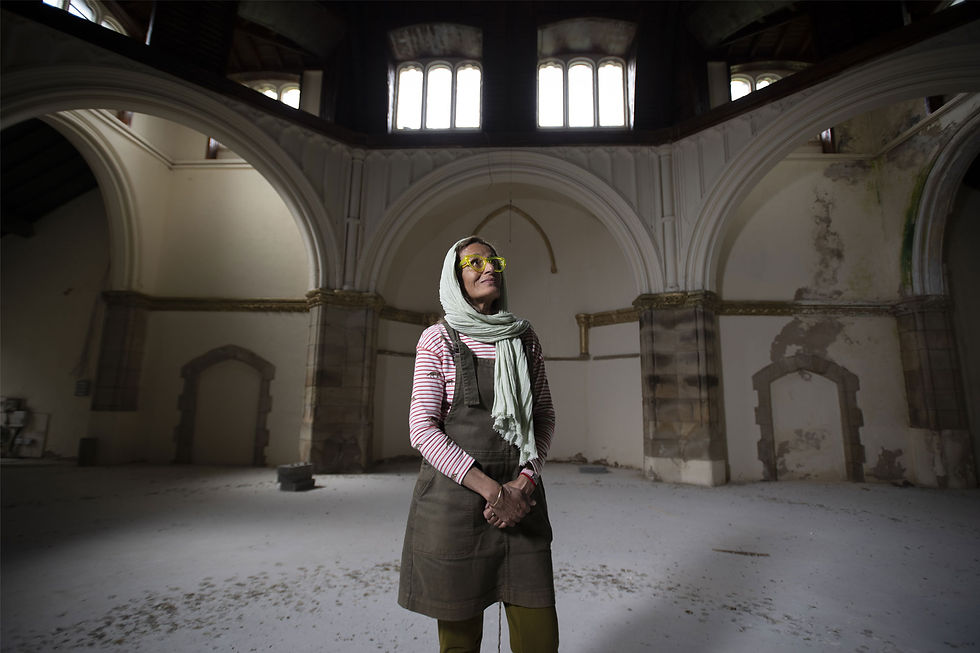
"The Gurdwara was a very peaceful place. There were very few [Sikh] people around in this time. And the people were very caring towards each other. Very friendly. We went to each other's homes without invitation. Just knocked and went. So it was like a family, a big family.."
Selfless Service
The Gurdwara was welcoming and friendly but also provided opportunities for many Sikhs to practice “sewa” – selfless service. One example is “langar”, which is the free community kitchen found in many Gurdwaras. As Hardeep says, “everyone, no matter who you are, whether you are Sikh or not, you can come and eat with us.” Lots of women used to help with langar. But the Gurdwara hosted many activities and services. Bajinder Ranu was one of the first Punjabi teachers and many remember her lessons to this day.
Baljinder Ranu: I found out that they teach Punjabi there. They were not in a proper system because [the teachers] didn't have a teaching background. I was a trained teacher in Kenya. But that qualification was not considered because I did after the independence, my teacher training. So then I had to do my teacher training again. We did proper classes. Then we started doing GCSEs, A-levels at the Gurdwara. Roseville Centre could register the students and send them for exams. There were not as many teachers at that time. I was teaching a lot of children. One class on Wednesday, one on Friday, Saturday, two groups, and Sunday – five groups in total.
Hardeep Kaur Kalsi: We set up a library for the members, the Sikh historical books or religious books, and we set up a school for children to learn Punjabi. I was involved in teaching Punjabi to the girls, and Mrs. Ranu was there as well. It was on Sunday. I was involved with the education side, so I did start with a playgroup course, and then I started a playgroup for the children. From there, I got a job in a day nursery. We prepared langar for the women. There isn't any difference between women and men. They both can go in the kitchen and take part in the cooking and serving. The women, they decide what we are going to cook on Sunday. It's just simple vegetarian food. The kitchens were very small!
Baljinder Ranu: In those days, there was not [many] roles given to women, apart from cooking in the kitchen. Many women don't come forward: either they are lacking confidence or they are not allowed by their families. In every Gurdwara there are certain selected people who run the kitchen. The men were serving and sometimes they came to help with washing up. In the beginning, in the Gurdwara, they didn't have langar on Sundays. They said, you know, it's hard work, it's a lot of work, they stopped it. People started complaining, because it's best for the community to have langar - so then they started again. That was the best part, I thought, that it brought the community to the Gurdwara, and we met with more people, became more friendly to each other. They don't have to stay home to prepare meals, they all come together.
Hardeep Kaur Kalsi: I was musical as well. There was a group of men, we called them Raji. They were performing, and so a women's group was organized. We also performed in the Sikh temple.
"This Gurdwara wasn't based on caste. That is the principle of Sikhism: everyone is equal, and everyone, no matter whether you're high caste or low caste or middle class or upper caste, you are welcome to the Gurdwara."
The Last Days of the Gurdwara
By the 1990s, the decision was taken to move to a larger, purpose-built Gurdwara. Sarbjit Kaur (manager of Sikh Elders Service) talked with great sadness about the last days of the Old Gurdwara and with great enthusiasm of the transition to the New Sikh Temple.
Sarbjit Kaur: I was married [in the old Gurdwara] in 1995. [When] I first stepped into that Sikh Temple, I remember the beautiful ceiling, the acoustics. Such a warm community and how everyone was very friendly. Everyone wanted to get involved, join the committee. “Would you like to become a Punjabi teacher? Would you like to do sewa in the kitchen?” Everyone absolutely embraced me there, which I felt was such a nice warm hug from the community as I'd just moved from a different part of the country. I became part of the committee; I did PR; I taught Punjabi as well to the little ones. I got stuck in quite a lot. And I think that helped me because I'd made my acquaintances, my relationships all started by attending the Gurdwara.
Sarbjit and her husband chronicled their life as part of a BBC project, making many films about Sikh events. They were both very involved in youth projects with young Sikhs.
In those days there was a group called South Asian Youth Forum. They used to get tickets from Leeds United to go and watch football matches - but they still didn't go because of the racism in those days. They had a fear of going to a football match. The Sikh temple was a place where they felt safe. They could hang out, do things together, set up their own club, go for walks, spend time together. And they'd clean the gardens. That's just something that's kept them going. My husband used to teach Sikh studies there.
When we transitioned from the new building to the old building, I was involved with that as well, helping with the planning, the designing and stuff. It was very hard for us to let go of such a beautiful, historic building and go to this purpose-built building. It just didn't have that same feel. But the new building has its purpose. But the historic building had a lot of stories.
The Sikh community still own the old Gurdwara building. Sarbjit is hopeful that, one day, the old temple will re-open, possibly as an education centre.
[The old Gurdwara] was vacant for a long time, it was beyond repair. There wasn't the funds for that. All the money was invested into the new premises, the new Sikh Gurdwara. [The building is] still part of the community. It'll always be part of the community. I don't think the community would ever want to sell that building. It's something that they don't want to let go of.
Reflections
The Old Gurdwara was a very special place for us Sikhs. I too remember as a child going there every Sunday with my parents and younger brother. We looked forward to meeting our friends, sitting in the sangat for a while, then playing outside with other children in the small grounds outside the main steps. We were not allowed outside of the gates - we were slightly fearful and obedient as children. There was the music or holy singing and the library. Of course, the Langar, the holy kitchen was open for food, prepared mainly by the ladies which is part of coming together for worship. Then there were the weddings and births and deaths to witness too. The most important aspect was that families were very close and there was a lot of mingling and good will amongst the community. Everyone was welcome at the Gurdwara. They were precious times.
The Hamara Centre is a beacon of community. Housed in a former Methodist church in Beeston, it’s the largest ethnic minority charity in Yorkshire. But it had small beginnings. In the 1990s, a few men decided to offer support to their elders and started by opening a small shop on Lodge Lane.
Nissr Ahmed: I came in October 1965, from Pakistan. My dad was here. He was in the British Army. Then when he got retired, he came to this country. And then after a few years, 1965, he called [for] us. Four brothers and my mum, we came to this country, October 1965. We came to Keighley. My father had his own house. After maybe ten months, then we moved to Bradford. We were there till about 1968. And then we moved to Liversidge, near Heckmondwike. In 1983, I moved to Leeds. When I came [to the UK] I was 15. You know, culture in Pakistan and culture in Europe is different. When we came to the airport, it was embarrassing for me. Reason? Because women were wearing a miniskirt. And I've never seen that before in my life. I couldn’t believe my eyes!
I learned English in the community or when I was doing taxis. I was working in textiles. Then I was working for a place in Cleckheaton, they used to make brake pads and brake shoes. Then I was working for a wire factory, to test the strength of the wire. I got retired from there because it was closing. I started doing taxi for about four years. After that, I started my own business as a milk round. But I fractured my spine. I was picking up 20kg of milk in the wrong position, my own fault. And I couldn’t work.
1994. We were in a committee in a mosque. Myself, Farouk, Munir. And there was another guy from Batley, Sayed. We had a meeting. We thought, do something for elder people. For senior citizens. Some of our elders, they needed to sit together and have a conversation - or share their sorrows and all these things with other people. Older people sitting at home doing nothing. And they're getting bored. And some of them have, you know, maybe a problem in the house. We thought, let's do something for them, which will be beneficial to them in the future.
We couldn't have a public meeting in the mosque, because mosques are only for, you know, praying. We had to pull out from the mosque committee. We had to resign. But I still use that mosque to go for prayer. I think it's in our religion as well, to look after the elders. That's what I was thinking. I mean, my mother passed away six years ago. I used to help her whatever I can. Whenever she'd ring me, she'd say, come and see me, so I had to go. So this is our religion as well, to look after parents, look after elders.
Number 73 Lodge Lane, we started from there. It was two shops. We wasn't using the first floor, just the ground floor. We had to make a door, you know, to the next door. And we were having meetings there, elderly people, helping them. If anybody needed something, we used to provide them. I wasn't working. I was on the committee. Same with my partners, Farouk and Munir. They were doing voluntary. The first grant we got was £27,000 or something. For workers. Then, after that, we applied for a grant from National Lottery. And we got the grant.
[The new Hamara building] was a church. We bought it for, I think, £150,000. And the renovation and all, you know, it was expensive. That was 2004. Hamara Centre is not only for, you know, Pakistani people. It's for everybody. Every race, every country. Hamara means “ours”. We had a meeting about so many names, so how do we choose Hamara? It means “ours” in Urdu. Since this has been built, so many different people come. It's for people with learning disabilities. People, if they require any advice about job centres, or about their pensions, they come here. People are coming for advice for immigration. The young generation, they come for the nursery here on weekends. And also, Christian people, on a Sunday, they use this space for a few hours. There's nothing in Leeds like this. You get satisfaction inside that you're helping somebody. Life… it's not the money. It's, you know, how you help the people.
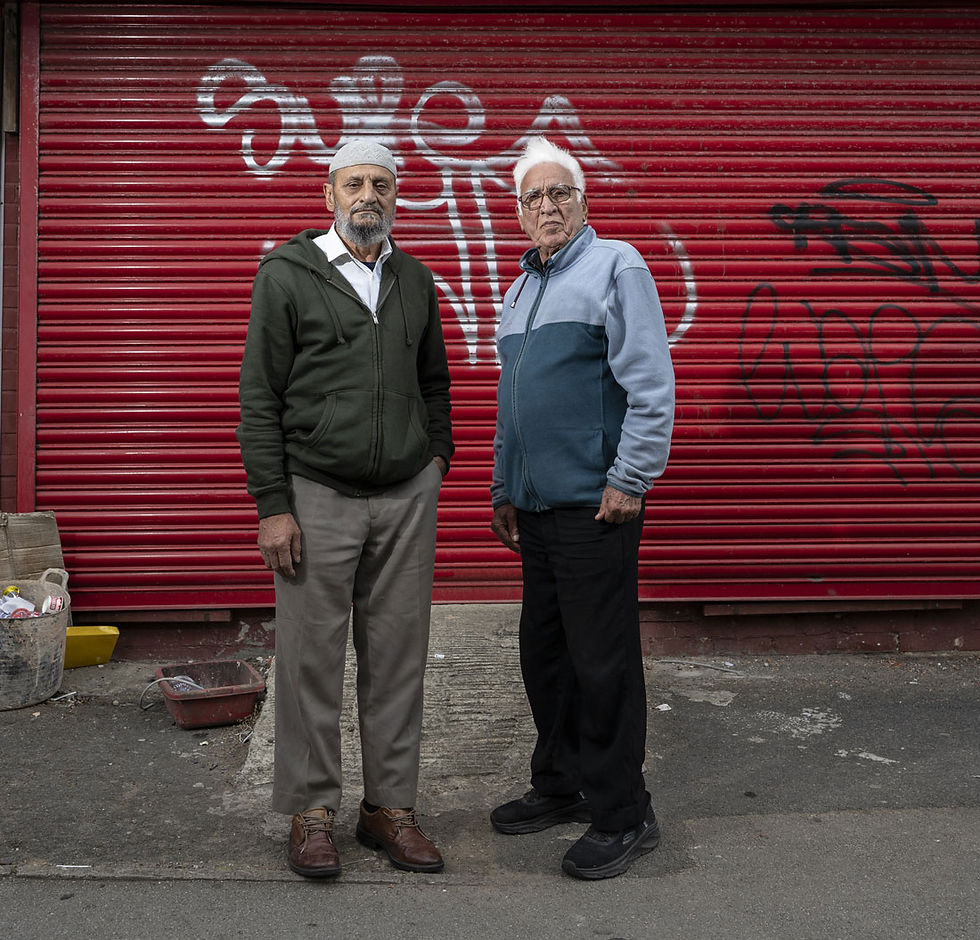
"Hamara Centre is not only for, you know, Pakistani people. It's for everybody. Every race, every country. We had a meeting about so many names, so how do we choose Hamara? It means “ours” in Urdu."
Mir Bostan: We used to be at Lodge Lane, the small shop. We used to sit there, myself and Mr Nissr and the other gentlemen. We paid, every week, five pounds from our own pocket to bring food for the elderly people. A lot of the elderly people, we go down, collect them, bring them in the centre. Then after, the afternoon bus home. I said we need a coach. A 16-seater. So they gave us a coach at that time.
When I was young my mother died. Struggling, you know, need money and need some care. Starting from that time, I was always thinking about trying to help other people. And God help me I have. This is why I am all the time, for 30 years now, any function that is on, I bring the camera down. Without charge, I make the film. And pass them to them for funding. This is my feeling. Help other people and Allah will help you.
A lot of elderly people, they can't speak English. They needed help. To tell them in their own language to come down here and enjoy yourself. And any feeling you have inside – anything - declare it. Be nice. Talk to each other. I've been helping everyone. Making tea, singing, dancing. Making happy people. I love it myself. To help other people. Whatever difference, whatever colour they are, you are a human being - Allah made you.
Well, from the beginning to now, it's a lot different. I'm very happy to have this place and bring everybody. I usually go knock on the people's door and come down. A few months ago, we used to take dinner to the people's house, if they can't reach here. And now, every day we have dinner supply from our canteen. We have a queue every day at 12 o'clock outside. That's great.
I’m very happy, very proud. Proud of the English people, they're helping. You see, without them, we're not here. You know, we can't do everything ourselves anything, we have had help from English people to build this place. And keep everybody happy!
Thank you to Diane Fairfax and family; Sarbjit Kaur at Leeds Sikh Elders; and Bikram at the Sikh Temple. Find more about Hamara online. (https://hamara.org.uk/)