


Explore the history of Leeds’ LGBTQ+ community through the bars, clubs and cafés that became places of safety, friendship and belonging. From hidden venues and private clubs to the vibrant scene of today, hear the stories of the people who built and shaped Leeds’ LGBTQ+ history.
Introductions by Chris Hoardley
Interviews by Chris Hoardley, Tom Bailey
I moved to from London to Leeds in the early 2000s. I’d found the London gay scene quite difficult; it was only when I started going out in Leeds that I found a much more acceptance. The “gay village”, as I knew it, was an inviting, welcoming space. People would talk to you – even the door staff! Queer venues in Leeds had a blend of all different types of sexuality: gay, straight, lesbian, bi, trans. As young man coming out, Leeds was perfect for me. The acceptance I found on Leeds scene massively helped me to get to a place where I was confident enough to come out to my friends and family. I could be absolutely who I was,
That welcoming feeling continues to this day in venues like the New Penny, The Viaduct, Fibre – and loads more. But it wasn’t always like this. There were times when it wasn't easy to be gay and LGBTQ venues were more hidden. It was the older generation of Queer people who laid down the foundations, build up the community, and looked out for each other. In this chapter we hear stories from people who were growing up tin hat previous era. They knew they were different - and it was the gay-friendly bars, pubs, clubs and cafes where they could find places they could be themselves.



"If you don't show your history and show people where everything came from, people might be a bit too blasé about things, or think it doesn't matter, and then before you know it, your rights have gone."
STEVE MARSDEN
-Steve-1.jpg)
I was born and bred in East Leeds, grew up there - Harehills, Burmantofts. I met my partner, that was 1987. I saw him first in the New Penny. Then I went to the old gay nightclub called Rock Shots 2 and he was there. I could see he was interested and I was interested in him, so I went over and I said hi. Rock Shots 2, that was the first big gay nightclub in Leeds. Underneath it they had a place called Bananas as well. So it was a bar but it had a late-night licence. There was lots of attacks on gay people back then. When we used to go there [to the nightclub] on a Saturday night out, quite regularly gay men were there educating themselves [about the risks of HIV]. There were volunteers, they were giving out condoms and lube and saying, “This is how to have safer sex.” So it was the community supporting itself.
That felt positive, but it wasn't all sweetness and light. You had to be careful where you were and what you did, and how you showed yourself, expressed your sexuality - because of queer-bashing. The police, back then, they went in gay bars, if then they found men doing anything consensual with each other, they would then nick people. Queen's Court, when that first opened, and applied for its licence, the Chief Inspector of West Yorkshire Police went to the Council Licensing Committee and objected. [It was apparently] a magnet for runaways, and at-risk teenage boys, and being preyed upon by these, “predatory homosexuals.”. But luckily, Lorna Cohen, who was the chair of the subcommittee gave them a hard time and she dismissed their objections. So there were some allies.
Before Queen's Court opened, there was place called Charlie's above there. Charlie's was very much the demi-monde. It was frequented by sex workers, petty criminals, few drug takers, you name it - but then gay and lesbians went there too. It was upstairs and you had to be in the know to get in there. You had to go up some steps, and it was, like, knock on the sliding door, the little hatch [opened] and if they recognised you or people with you, you were in.
“[IN THE PENNY] YOU WERE TERRIFIED THAT SOMEONE WOULD RECOGNISE YOU BECAUSE I WASN'T OUT. IT TOOK ME A LONG TIME TO BE OUT WITH MY FAMILY. THE NEW PENNY [IS] PROBABLY THE COUNTRY'S LONGEST OPERATING LGBTQ VENUE. IT'S IMPORTANT TO MARK THAT. I FEEL A SENSE OF REAL PRIDE.”

You did get a problem with football fans. The Viaduct pub used to be where the Leeds United fans used to congregate, believe it or not. That used to sometimes cause tensions and some of the bars used to have to, when Leeds matches were on, put security on the door. Eventually, Terry George took over the Viaduct, did it up and cleared it out and I think they got the message.
It was intersecting with the punk scene down there, and the new wave, people dressing alternatively. Mark Almond (of the band Soft Cell] used to go in there, and in the New Penny. There's a place called Brannigan’s, and John Keenan, the famous promoter in Leeds, he ran the F Club there. I think it was no accident that it gravitated there, down the broken end of town, because there was alternative folk there already. People felt safer. So I would go in the Penny but also would go across to the F-Club. I moved between worlds. You could go to the Penny and dance and be yourself. A lot of punk was feminist-orientated, there were female bands, women standing up, expressing themselves. And sometimes that expression of feminism was also about the sexuality.
Then we gravitated over to the Warehouse Club, which was very welcoming, because it was like full of all the strange folk, including people who might have been lesbian, gay, bisexual. And that was quite liberating because the people who went there, they may have been straight, but they could just be who they wanted to be and experiment. It sounds very elitist, but you have to look great to get in. But it didn't mean you had to spend a fortune on it - second hand shops, thrift shops, junk sales, you name it, to look like this. But it kept the knuckle-draggers out. So if two men were dancing together, so what? You'd go to the loos, there'd be men in the ladies’ and ladies in the men’s, and the ladies would be like putting the hairspray on their male friends and doing the hair for them. And then there'd be male friends in the ladies sorting the makeup for the girls. And it had a four o'clock license, the only place in the north of England.
-Steve-3.jpg)
-Steve-2.jpg)

You did get a problem with football fans. The Viaduct pub used to be where the Leeds United fans used to congregate, believe it or not. That used to sometimes cause tensions and some of the bars used to have to, when Leeds matches were on, put security on the door. Eventually, Terry George took over the Viaduct, did it up and cleared it out and I think they got the message.
It was intersecting with the punk scene down there, and the new wave, people dressing alternatively. Mark Almond (of the band Soft Cell] used to go in there, and in the New Penny. There's a place called Brannigan’s, and John Keenan, the famous promoter in Leeds, he ran the F Club there. I think it was no accident that it gravitated there, down the broken end of town, because there was alternative folk there already. People felt safer. So I would go in the Penny but also would go across to the F-Club. I moved between worlds. You could go to the Penny and dance and be yourself. A lot of punk was feminist-orientated, there were female bands, women standing up, expressing themselves. And sometimes that expression of feminism was also about the sexuality.
Then we gravitated over to the Warehouse Club, which was very welcoming, because it was like full of all the strange folk, including people who might have been lesbian, gay, bisexual. And that was quite liberating because the people who went there, they may have been straight, but they could just be who they wanted to be and experiment. It sounds very elitist, but you have to look great to get in. But it didn't mean you had to spend a fortune on it - second hand shops, thrift shops, junk sales, you name it, to look like this. But it kept the knuckle-draggers out. So if two men were dancing together, so what? You'd go to the loos, there'd be men in the ladies’ and ladies in the men’s, and the ladies would be like putting the hairspray on their male friends and doing the hair for them. And then there'd be male friends in the ladies sorting the makeup for the girls. And it had a four o'clock license, the only place in the north of England.


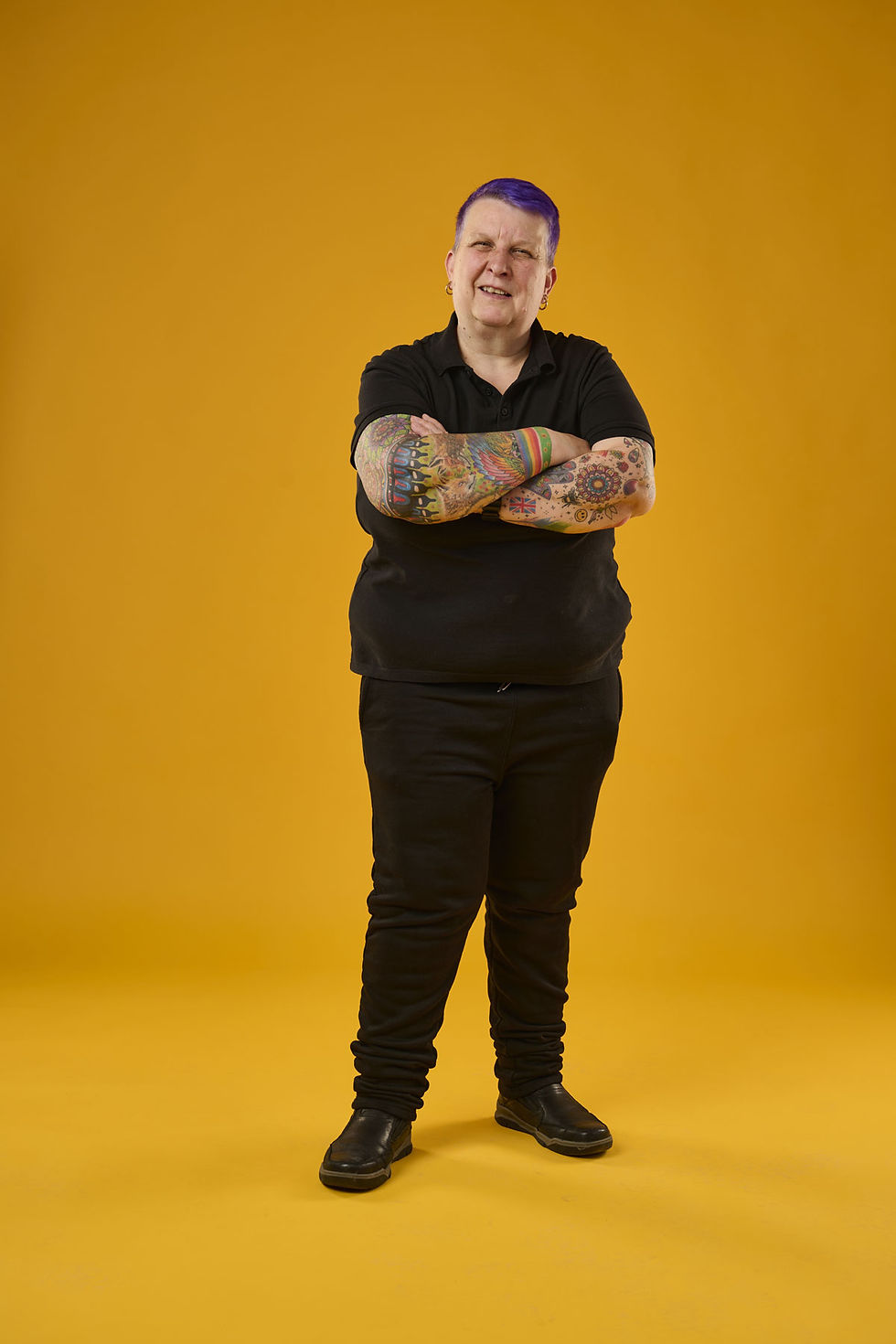
I feel as if I've opened doors, and I've set a trend as the first female door staff in Leeds. Now there's more acceptance of gay people. Now you say it’s “gay friendly” - everybody's welcome.
LESLEY FOWLER

I'm one of seven. It was a big family, I was in the middle. I'm the only one that's gay. I was a tomboy, one of the lads, basically. I had male friends that I used to hang around with; if they were climbing trees, I'd be climbing trees. I didn't want to be a boy, I just liked to be boyish. Rather than the feminine type.
It was in the early 80s. I was underage and going out drinking in bars - as you did years ago - when I was about 16 or 17. There used to be a bar above where Queen's Court is now, called Charlie's Bar. It was private members only, because it was full of gay people. Years ago, it all used to be shoved under carpet, or you were queer-bashed, if people found out that you were gay. Charlie's was just a way to meet people. Growing up, I thought that I was on my own [being] attracted to women. I met gay men and women, bisexual. It was a safe place. I knew two women that was living together, that was gay. They said, “Why don't you come to Charlie's?”
“I don't think I'll get in because I'm underage.”
“Oh, they won't know!”
I went under one of their friend's names, then I just became a regular. It was dark, secluded. They used to have police raids and because I was underage, I was snuck under the DJ box, or I went down the fire exit. I was a bit of a regular on a weekend. My parents thought I was babysitting - I was sneaking out. I actually was sleeping in an old van, just for a couple of hours before I could go home - in a car park, down where the old Red Lion was. There used to be a café where everybody used to go and meet up after [the bars closed]. The Klondike Café - I used to fall asleep on the steps. Because I was friendly with quite a few people on the gay scene, someone might offer me a sofa for the night.
Being a gay woman, I used to get lots of stick from straight men wanting to turn me straight. I was queer-bashed by a straight man because I was sat next to a girl on the bus. It was a hard life in the 80s. I used to get called all sorts of names. I'd get punched. I'd have a black eye or a busted nose - I had to tell my parents that I fell. When you're first coming out as gay you feel isolated, alone [and Charlie’s] was a safe place.
Once a month there used to be Confetti’s, that was in the Merrion Centre. That was a nightclub that used to hold a gay event every so often. I remember seeing Take That there! The guy who actually owns the Viaduct and Fibre, Terry George, I remember him being the DJ there. So he started out as a DJ. Now he's a multi-millionaire.
“HERE USED TO BE A BAR ABOVE WHERE QUEEN'S COURT IS NOW, CALLED CHARLIE'S BAR. IT WAS PRIVATE MEMBERS ONLY, BECAUSE IT WAS FULL OF GAY PEOPLE. YEARS AGO, IT ALL USED TO BE SHOVED UNDER CARPET. CHARLIE'S WAS JUST A WAY TO MEET PEOPLE.”

I was in a bar in Leeds City Centre,iIt wasn't gay friendly, just a normal straight bar. I was talking to door staff. I says, “How come there's no women?” Because [they were] searching women for drugs. And no women on the door. I was talking to a landlord about it, he says, “If you think you can do the man’s job. Why don't you try?”
I'd toughened up by then because I was sick of getting queer-bashed. So I used to help on the doors, just voluntary. I wanted to get the experience. I liked the idea of being in authority. To prove to myself that I can be tough. I used to go to a gym, but you didn't really have to be strong. It's how you perceive yourself. I was more easily approached. Rather than your big burly thugs, I had a bit of compassion. I used to deal with [situations] by talking to people. And it like calmed the situation down. I could talk to people before it escalated. I could see a male and female in distress.
I met someone else who was a doorman. He was a gay man called Dave. He said, “Come down to our club.” This was in the 90s. I started working there. First one was Belinda's Chocolate Factory, then it got changed over to Primo's. I used to search the women, because some women thought it was offensive for men to be searching them. I worked on the doors at the New Penny as well. You'd have people walking past and, like, looking. They were scared to go into a gay bar. I remember this guy called Andrew, he'd just turned 18, he was camp as anything, but he was scared to come in. We started talking because I asked him if he was alright. And he says, “I've never been in a gay bar before. I've come out as gay, my parents have like kicked me out.”
I says, “Well, you're welcome to come in, just for a drink, to have a look round, see if you're okay.”
He spent nearly all night in the New Penny. And he came out at the end and he says, “That was absolutely fabulous!” I'd introduced him to men and women. No one was alone. Open arms. We know how it feels to be gay.
In the 90s, it came out that all door staff in Leeds had to be registered with the police and Leeds City Council. I was the first female to work on the door and my badge number is number 10. There’s thousands now!
I used to get sexually harassed. Called all sorts of names. By the men that I'm supposed to be working with, my work colleagues. But I stood up to them and said, “Get lost!” It pushed my confidence up. I was a people watcher anyway. I could see where the signs were. Women used to come up and say, ‘That guy over there tried touching me up.” A [male bouncer] might say, “Oh get over it.” I feel as if I've opened doors, and I've set a trend as the first female door staff in Leeds. Now there's more acceptance of gay people, it's like, you don't call a gay bar a gay bar, you don't call a straight bar a straight bar. You say it’s “gay friendly” - everybody's welcome.
At the end of the day, I'm a quite a calm person. I'm quite easy to talk to. If anyone was having a problem, or whatever, they used to come to me, rather than to somebody looking like an angry gorilla. So, I enjoyed it. It's a lot of years ago, but I still have fond memories. But it's a hard job. As soon as it started becoming acceptable for gay people, life became more easier and bearable. I wasn't getting queer-bashed. I wasn't getting assaulted. I wasn't getting sexually harassed by men and everything. End of the day, I'm just me.




LEEDS GAY SCENE PRE - 1967
Never Mentioned
Eric Mountain
[I came out] after my National Service I was an apprentice printer in Leeds. I didn't know there was a scene at all until after that, and I met my partner in 1955. I only ever went in one gay pub, but we used to go in there, at the bottom of Briggate, the Royal. Lower Briggate. There was The Bridge - they always used to say at the Royal, that was where all the posh queens went. The New Penny was rough. The Mitre, that was the one that was a place to go for lunch, during the week. It wasn't gay at all. At night you went downstairs, and that was the gay pub.
I worked in a big printing factory at John Waddington's. And it was never mentioned at work. I don't think anybody even made any cracks about it. Well, they must have known. But they all knew my partner. Because if we used to have an outing at work, he was always invited to go with me.
Well, as I say, I was born south of the river. Borders of Hunslet Moor. But I moved to Kirkstall because I worked in Kirkstall. Waddington's had a factory there for posters.
During the war, my father was a member of the Roman Road Working Men's Club on Dewsbury Road. There was a chap who used to go in there during the war. He used to go in with his boyfriend, who was a paratrooper. Then he was on leave. He used to go in there. His sisters too. The funny thing was, my mother and her family knew his two sisters from when they were younger. Nobody ever mentioned that they were gay, but they obviously were.

"A LOT OF THE PUBS THAT WERE GAY IN THOSE DAYS WERE MEN-ONLY BARS. YOU DIDN'T TALK ABOUT [OR GO] SHOUTING OFF THE ROOFTOPS THAT YOU WENT TO CERTAIN BARS. IT WAS MORE LIKE A PRIVATE CLUB, REALLY, WHEREAS NOW IT'S VERY OPEN"
A Private Club
Colin Sykes
I was born in Huddersfield, but I've been in Leeds since about 1962. I was one of the lucky people. I seemed to just slot into it without a lot of bother, really. Although, I did get arrested a couple of times when it was illegal. It was never any trouble to me, so far as I get upset about it. I lived at home with my parents, of course, as most people did in those days. It was never mentioned to them, it was just a no-go subject. I'm sure they realised, because it was never talked about. I was arrested and had to appear in court the next day. This was when I'd moved to Leeds, in the early 60s. I didn't make the newspapers, so that was all that mattered, so nobody knew about it. I only got fined £50.
[The Mitre] was a businessman's pub at lunchtime, and a gay pub at night. The New Penny - it was called the Hope and Anchor. And when decimalisation came, for some strange reason, in 1971 they changed the name of the pub to the New Penny.
There used to be two railway stations in Leeds. And the in central station, which is no longer there, there was a hotel attached to it called the Great Northern. And that had a men-only bar. In fact, a lot of the pubs that were gay in those days were men-only bars. But that was a very busy pub, the Great Northern.
[Things changed] when the law changed, it's been a gradual progression since then. The first five or six years after the law changed, there was very little difference. And then it gradually started. It was more like a private club before. You didn't talk about shouting off the rooftops that you went to certain bars. It was more like a private club, really, whereas now it's very open. The so-called gay bars now, you get as many straight people as you do gay. My straight friends say the music's always better in gay pubs than in bars and clubs, Stag do's and hen do's have started going in, infiltrating into the gay scene bars now.
Overall it's better. At least you can't be arrested for just doing nothing, as it were. It's always much better, especially for the young people today.

When I went to the Roxy, that was 95% men, and there were people who'd come from all over. We come from Hull, people would be there from Bradford and York and all the rest of it.
TONY ROBINSON & PHIL HOWGATE


Tony:
Being from Hull, sometimes we'd have a car trip on a Sunday afternoon to go to the New Penny for the tacky drag and the sticky carpets. This was before the licensing laws changed and the pubs shut was at two o'clock in those days. And then we'd probably go to McDonald's afterwards before heading back home. Apart from McDonald's, very little was open on a Sunday afternoon. There was a cafe in the Corn Exchange. So after the pub shut, [sometimes] we'd go down to the Corn Exchange, to the cafe, and maybe get a cup of tea and a sandwich before getting the bus back.
And then we occasionally would go on a Tuesday night to the Roxy in the Merrion Centre, they had a gay night once a month. We had a bus trip through on a Tuesday night. It was the heat of Mr Gay UK, it might have been 85, maybe 86. Occasionally on a Saturday night, I'd get the train over. But of course, that meant either pulling or having to stay awake and get the first train back on Sunday morning
When I went to the Roxy, that was 95% men, and there were people who'd come from all over. We come from Hull, people would be there from Bradford and York and all the rest of it. The New Penny, there was basically a corner that was all women. That was basically just where the DJ was, in front of that corner, in the front of the stage. The back room was all men. A lot of the ladies tended to be straight friends going out, rather than the lesbian community.
In terms of drag acts, well, there was Andre Adore. There was Barry Stevens. He used to get paid in Red Stripe or Breaker. He did a fantastic Edith Piaf. They looked very physically similar. And they both had the alcohol addiction, except I think hers was better quality wine [than him on] the Red Stripe. Lily Savage played there. Dave Dale played there. There was Vicky Graham and Bridie McBride separately, and then they used to come together and do a double act. Vicky Graham was the landlady, so it was great. Didn't cost her that one, it was only afternoon to put herself on.
The Red Lion was there in the 80s. Beginning of the 90s, you've just got The Bridge and The Penny, Bananas and Rockies. Rock Shots changed to Rockies. Then Queens Court opened, after that Blades. The “Vile Duct” [The Viaduct] was there anyway. And it got gentrified. It was where the down and outs used to go! Before the Marys moved in…
“BLAYD’S USED TO BE THE LESBIAN BAR. PAULA WORKED THERE, SHE WAS A HETEROSEXUAL WOMAN WHO WAS ABSOLUTELY LOVED AND ADORED ON THE GAY SCENE. SHE WENT FROM NEW PENNY TO BLAYD’S, AND HELPED LESBIANS FIND IT. IT'S KIND OF A BIT HIDDEN AWAY.”

Phil:
Leeds, May 1977. I got a job at H. Samuels on Briggate. And after work, my work colleagues said, “Oh, shall we go for a pint round the corner?” And of course, I'm 16 years old. I don't drink, but I said, “Yeah, I'll come for a shandy.” So we go around the corner to a bar called The Peel. On Boar Lane, where the C&A was. We went into this bar and we sat and had a drink. And my work colleagues then informed me that if we came in the other door, that went to the gay bit. And of course, they then started to say, “Oh, the barman fancies you” that type of thing. My ears pricked up at this, not knowing that such things existed. But never did anything about it. But two or three times after work, we would go in there.
A few years later, I've moved jobs to Wakefield, I plucked up the courage to go to The Peel and go in the gay entrance. And it's quite early on, but there were people in. So I'm stood there in the corner, really nervous. I thought, “Oh God.” I didn't make a conversation or anything like that. I put some money in a one-arm bandit. And this guy comes over and starts talking to me. His name was Stan and he was probably in his late 40s. He basically, “If you want somebody to talk to, do you want me to give you my number?” And I said, “Yeah, that'd be all right.” Anyway, he got out a card. And he tore it in half. And he gave me the bottom half of this card with his telephone number on it. And went back to join his friends. I got my bus back.
Anyway, maybe a week or two later, I think. “I've not done anything gay. I might do this. We didn't have a telephone in the house. So I had to go down to the public call box. So I rang this number. “I'm sorry, is Stan there?” And he said, if you want to meet up, you're quite welcome to come over to Leeds.” So I said, “What about Sunday?” So he gave me this address. And it was a gay sauna. I was like, gay saunas? This would be probably 81, 82, something like that. And it was underneath the arches. He said come about 6 o clock. So that happened
After that, nothing else was really done. I think I might have gone into The Peel maybe once or twice in the mid-eighties. But I was way too scared. You know, someone would see me. I didn't even know the Penny existed. Or The Bridge.
I came out in the 90s. I’d met a gay couple and they took me to Rock Shots or the Chocolate Factory – same thing. So that was sort of like nightclub and I remember going in there on a New Year's Eve. Then, opposite the bridge, that building that's on the corner there, that was Bananas. Also on Boar Lane, there was Hollywood Days, Hollywood Nights. Opposite the General Eliot. I used to go in there with a straight friend who I used to work with, if we both happened to have the same days off.




Every September, you get this influx of gay students. A lot of them get overwhelmed and that's when they find that they need somebody to talk to. I just used to talk to them.
TRACY FARRAR

As a child, I was neglected, deprived. But I escaped through books - it was the only escape. I followed the typical road that people with my background go through - I went and had kids to different men. I was young, I was 19, it was 1984. Looking back, I think I was a child. I think I did it because I wanted somebody to love me. I used to think that I was just bisexual. I'd had a girlfriend when I was 17. Because it was a person rather than gender. But for the last 30 years, I've been lesbian. Now I say queer.
You couldn't really come out and be a parent. It wasn't even a stigma, it was a rule. It was a local council that would take your kids off your “immoral household” if you had a girlfriend. We had friends, the council took the kids off her. That's what we grew up with, knowing you couldn't have kids and be gay. It was either or.
My oldest brother, he was really horrible, he used to go and watch Leeds United and then think it was alright to go - and he'd say the words - he'd go “paki-bashing” and “queer-bashing”. That's what he said. He thought that that was a great afternoon.
It was the New Penny that everyone went in then. I'd get off the bus and walk down the street. I'd stand at a corner and make sure nobody was looking, and then I'd run over the road to go in. I know it's crazy, it's an absolute lunacy – just to go in and meet your friends. It was a Tuesday afternoon, the first time I went in. There were a few of us that went in together. We were all around 16 or 17. I was 17 and I was at college. One of the lasses on the course, she said, “I've found out where a gay pub is.” We were like, “Oh, let's go!” I had the apple lager. We went in the little parlour. I still remember the parlour. It was great, we loved it.
[Later, I] got a job in the local club behind the bar. Seacroft Working Men's Club. I had a friend who worked behind the bar as well. We were really good mates. She's heterosexual. And me and her would go to the Goth nights. I'm a bit of an ageing punk rocker, really. But she was into Goth. It never mattered to Kayleigh what I wore, you know.
I went to Leeds university as a mid-life student. I did Gender Studies. I'd always done bits of volunteering since I was younger. The woman at the community centre, she said, “We need volunteers to help people learn to read and write.” So I started doing that. And then they talked me into doing an access course. Then I did the access course and then I went to Leeds Uni. While I was there, I got a job in the Bridge, behind the bar. When I first started working there, it had only just gone over to a gay bar. The [previous] owner that bought it, he was homophobic and he wanted to keep it heterosexual, but, obviously, down that end, they just never made any money, so he made it gay. Well, he said “gay friendly”, but he said that nobody could kiss in there, gay or straight!
“THE RED LION WAS THERE IN THE 80S. BEGINNING OF THE 90S, YOU'VE JUST GOT THE BRIDGE AND THE PENNY, BANANAS AND ROCKIES. ROCK SHOTS CHANGED TO ROCKIES. THEN QUEENS COURT OPENED, AFTER THAT BLAYD’S. THE “VILE DUCT” [THE VIADUCT] WAS THERE ANYWAY.”

Obviously, with it being in quite a prominent position on the corner of the Leeds Bridge, we did get trouble sometimes - and I helped people. I helped get trouble out. Because of my background, you know. The [new] owner, he said, “come on. I'll put you through for your badge.” That means that you can legally be a door person.
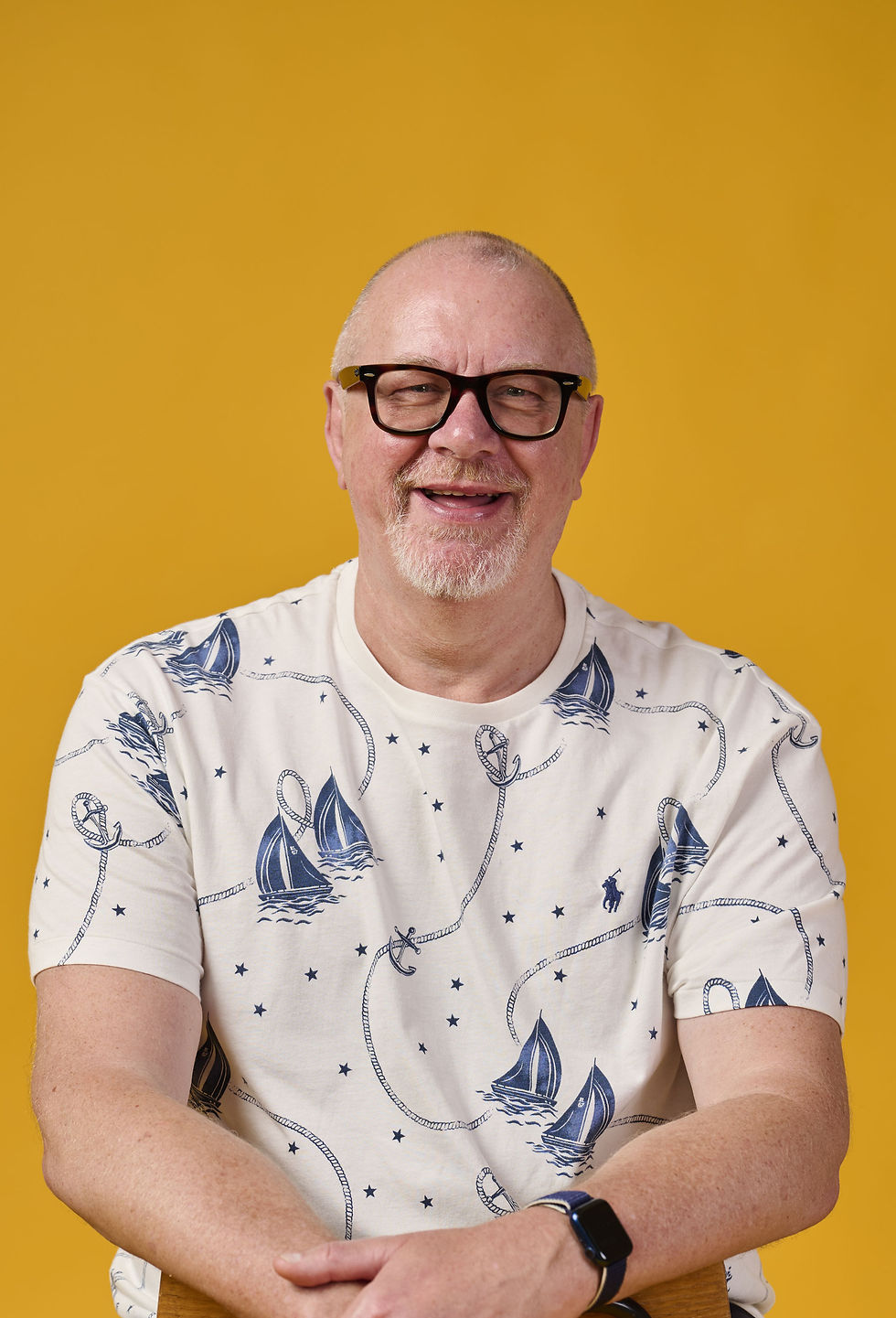
They nicknamed me Aunty Tracey. Because every September, you get this influx of students. You get those gay students, they're coming to Leeds and it's a big city. A lot of them get overwhelmed and that's when they find that they need somebody to talk to. I just used to talk to them. Help them get taxis if they needed a taxi or, you know, sit with them if they were a bit drunk. I remember a couple of lads, very effeminate, very young-looking lads, got into serious trouble. One of them said, “I've just escaped out a taxi.” I was just there for him.
Then I went to the New Penny. All this time, you see, I'm doing this degree. I was head-hunted to go up to Queen's Court, by the manager of Queen's Court. That was nice. And I won awards every bloody year, didn't I? They Called them Owlies - I won it every year for being a good bouncer.
I remember one night I was working at the New Penny. I don't know which nightclub it was [over the road], they kicked this lad out. I could see this lad's laid on floor, it's minus two, he's off his head, he's out cold, his T-shirt's wet through. I phoned an ambulance and I talked to him, kept talking to him, put my coat over him. A few years later, I'm on the door at Queen's Court - it's the Courtyard Parties – and this lad went, “I know you, I know you, I heard your voice. You once helped me when they kicked me out of a club.” I said, “I've always wondered how you are!”
We sometimes got trouble. The Bridge, you'd get trouble because you're on the way to Airline Taxis. The New Penny, because it were open later than anywhere else, you'd get people trying to get in there after they'd been kicked out from anywhere else. But I'd say in over 10 years I worked at Queen's Court and I got less trouble there than I ever got at Bridge and the Penny put together.
We're not really bouncers anymore. I still say a bouncer, but it's door supervisor now. You’re supposed to keep a place safe, aren't you? There are lots of vulnerable people in there, lots of people and their identities need protecting. You've got South Asian kids coming in and you've got to look out for them, haven't you? Make sure they're going to be able to get in a taxi and go home and be safe.
In Leeds, the pubs, the bars, they're all different. The thing about the Leeds gay scene is, you know, you go to Manchester and it's brilliant, but you can walk out of one pub, walk into the next and it's just like you're in the same pub, with just different people. Leeds gay scene's got something to offer, differently, in every bar. I mean, there’s Blayd’s. Blayd’s used to be the lesbian bar. Paula worked there, she was a heterosexual woman who was absolutely loved and adored on the gay scene. She went from New Penny to Blayd’s, and helped lesbians find it. It's kind of a bit hidden away.
One place that people don’t talk about is Klondike Café. It was a greasy cafe that catered to truck drivers, really. Over from where the bus station is now. But you could go in there and just order a cup of tea and they'd just let you sit for hours. That that was a safe space. It was open 24 hours. So, if all the clubs had closed down and you wanted to keep chatting, you'd go to the Klondike Café.
Another place that people never think about, in the 80s, you could go, to Chapeltown, to Strega Nightclub It was a really seedy, really seedy nightclub. The bar had bars on it. There were a gap to pass your drinks through. It were mainly black people. But you'd walk in and you'd be queer. The men would have their make-up on and their wigs, and, you know, women would look as butch as whatever. They never said no to us. We were all right. I think it's a case of people recognising that, you know, that you are as much, you know, that society, you're on the outskirts of society as much as anybody else. Both persecuted, so you get it.



These are safe spaces. You know that you're not going to get somebody in here who's prejudiced, who's going to give you a hard time. We know we can come in here and we know that we're going to meet other people who are in similar situations.
KATIE
I didn't come out as trans until 2014. I'd known I was different when I was three years old. I knew I should have been a girl when I was nine years old. But that was in 1959. It wasn't a topic of conversation in a working-class household or anywhere. There's no way you could change, I thought, at that particular time. So I just kept my head down and did what was expected of me, be a boy. You don't have a lot of options, really. It was a case of don't rock the boat. You just do what you can to survive.
I got on the gender care pathway and worked my way through whatever you have to do. Talking about your dysphoria, how it affects your life, what it would mean to you to transition. So I got an appointment at a hospital to have the transition surgery. I had it about four years ago now. I hadn't realised how much difference it would make. I knew what I always wanted ever since I was nine years old. What I hadn't realised was just how much it would mean to have the body that I'd always wanted since I was nine. And it was probably four or five months afterwards before it hit me just how big an impact it was. The difference was fantastic.
I started going out into town to Leeds First Friday, probably after a year or so after I came out. And I'd been to a couple of support groups, Trans Leeds and Transmission, again, so you're with all the people who are transgender, and you feel comfortable in that environment. First Friday is a T-Girl event. So it's transvestites, cross-dressers, transgender, all the people who present as female, all the males who present as female go to there, and it's, like, 200, 300 people, and it's on the First Friday, which is why it's called that. We used to start off in Cosmopolitan and then go over to Fibre. And then round different clubs, Smokestack, all of those. Fibre put food on for us as well, and we'll have a DJ up there. It was being able to be who you are in that environment and lots of other people who were in the same or similar situation. We were all slightly different, you know, because we're all individuals.
I'd be drinking orange juice. And I don't like loud music, so you can't have a conversation in the pubs round there. You can shout at each other, but you can't have a conversation. Once I got to know Out Together, and I started working with them as a volunteer, helping out… I’d got to know people and have conversations with them, and they were in the same age group as me. The problem with the transgender support groups is that they're all 18 to 25, or predominantly that, so for someone who was, like, 50 or 60, it's like the things that they're concerned about are, like, no. I'm way past that stage at the moment.
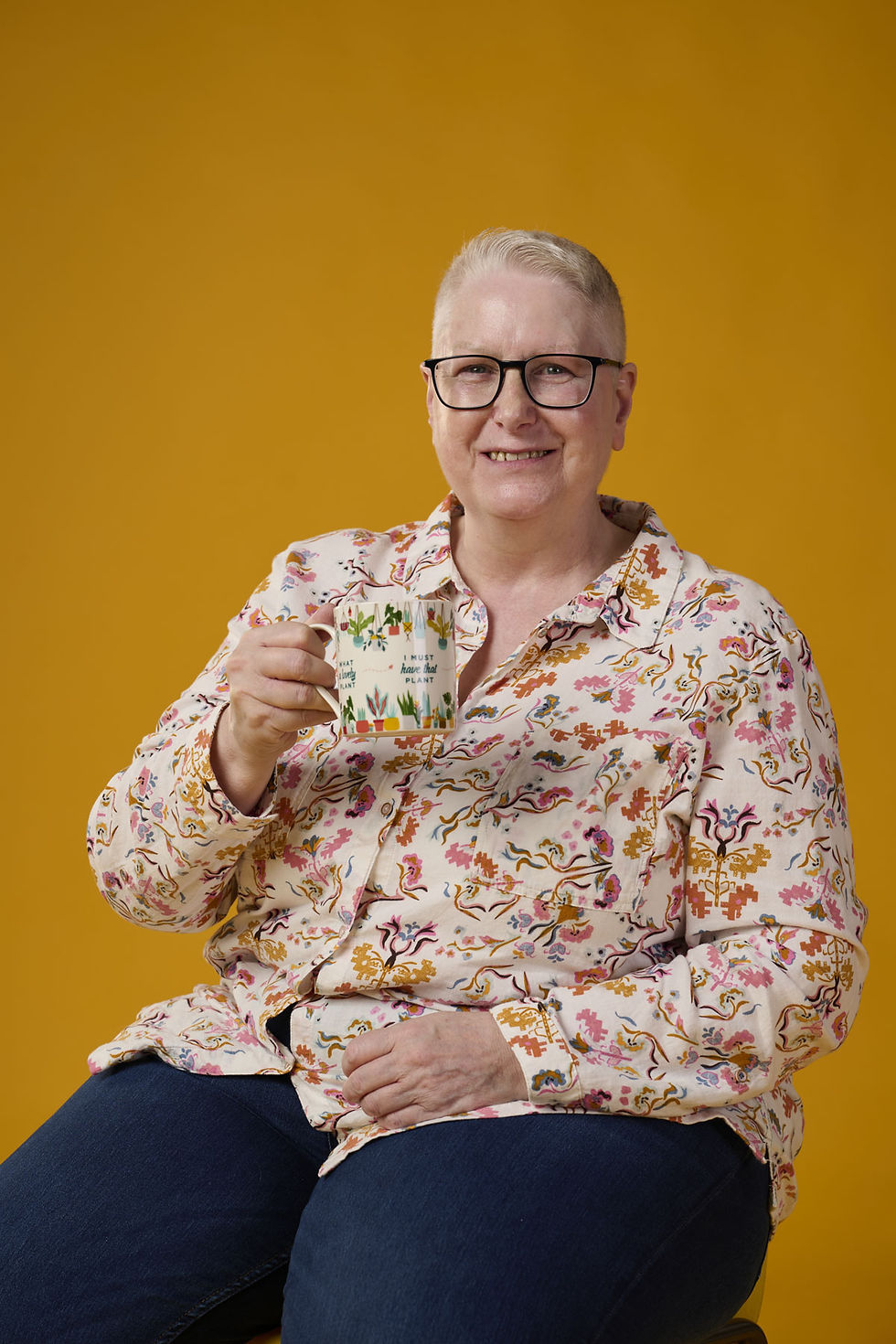
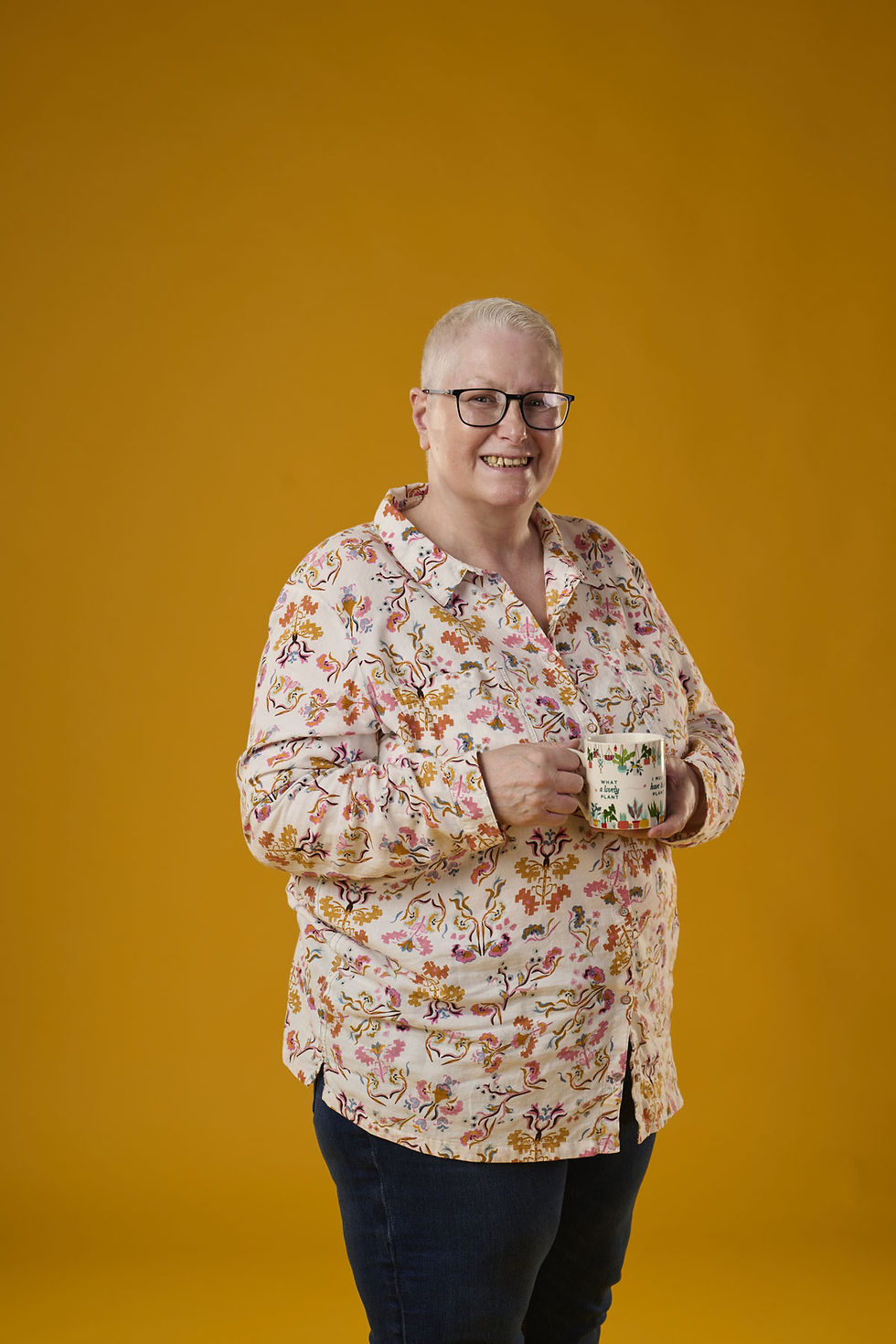
These are safe spaces. You know that you're not going to get somebody in here who's prejudiced, who's going to give you a hard time. Because the venue won't put up with it. If anybody starts like that, then they'll get ejected. And people know that. They know that they can't come into here, that they can't go into Viaduct and Fibre and start causing a fuss because they'll get thrown out. We know we can come in here and we know that we're going to meet other people who are in similar situations to us. So you've got shared conversations that you can have.
It's becoming a lot more acceptable. For LGBT, it's good. For trans, it's still got a long way to go. Again, what do we do about it? The only thing you can do about it is education. You can't tell whether a male is gay unless he's holding hands with another man. For trans, unless you can present exceptionally well, you stand out. Education is what we've got to do and that is working to a certain extent. We're getting there, I can assure you.