

INTRODUCTION
by Rosie Archibald-Darcy
Personally, I’ve always thought it’s nice to know our history. Part of my family’s history is that my Mum, Beulah, came over from St Kitts in the 1960s to work for the NHS in Leeds. So many black people did. Speaking to these NHS workers who came to Leeds from Africa and the Caribbean feels like opening a door that’s been closed for too long.
What strikes me most is that most of them said they started from basics. Some worked as cleaners, auxiliaries, others became qualified. But they worked. They worked the hardest shifts, sometimes the worst shifts, missing time with their families, pushing twice as hard as their white counterparts. Why did they do it? It’s because they cared. But they enjoyed the work, felt proud of it. And it makes me reflect on today, when so many midwives are off sick with stress. Something has changed.
That’s one of the reasons I set up my community interest company, Elders With Roots. I believe we should look after all our older people, especially those who contributed into the system and are now being overlooked, some even living in poverty. These stories are part of me, they’re something to tell our children and your grandchildren. And in sharing them now, we’re making sure they’re not lost. Through Elders With Roots, and through this People’s History project, their legacy lives on.

WORKING
WITH
WOMEN
Gloria Hanley
I was born in the beautiful island of St. Kitts in the Caribbean. I left St. Kitts in 1968 on the invitation of the British government to come to train as a nurse. Whilst I was in St. Kitts, I worked as a civil servant in the Prime Minister's office, as a short-time typist. But I got a bit restless, and I thought, “I would like to train as a nurse.” So when I found the advert for nursing in England, I jumped at the idea.
Of course, my parents didn't want me to come, because I was only 18, and my mum said it was too far to go. But I was determined. I did all the interviews and got to train as a state-registered nurse. I have this nature of helping, caring for other people. And I wanted to work with women, not necessarily men. I have six brothers, and they weren't easy to get on with. So I didn't really want to care for men. But I thought nursing would be for me.
I'm from a large family of 12; we had company and we played with each other. We didn't have friends, because we didn't need friends. But life was good, even though my brothers were a bit grumpy. I went hunting with them. They used to shoot birds, doves, and pigeons, because we could eat them. The boys didn't cook, I had to do the cooking. So when they shot the birds, I would have to clean them and cook them. We climbed trees, and we pitched marbles, and we played all sorts of games.
In the Caribbean, there is this phrase: the streets are paved with gold. England was portrayed as a beautiful country. Everybody forgot to talk about the weather. I came thinking it would be the same as the Caribbean; I came dressed in summer clothes. When we landed at Heathrow Airport and they opened the door I wanted to go straight back home. It was so cold. It was quite smoky. And when I spoke, the smoke was coming out of my mouth, and I was absolutely petrified. Now I know it was fog! I had a brother who was living in London, so he bought a big coat for me. It was about two sizes too big, but it was ideal because I could wrap myself in it.
"I wanted to work with women. I never hurried. I never interfered. I just talked. It was like a family affair. What's important is the trust."

I was disappointed when I looked for the streets of gold. There was no streets of gold in Hampshire. That's where I came to be trained. The training supposedly was for three years, but on the first day of school, we found out it was for only two, and that was for the State Enrolled nurses, which was a lesser qualification than State Registered. We were disappointed - angry. We went off to see the matron to ask for her to give us the reason. She told us, it's only for two years, and if we didn't consent to stay, well, we had no choice, she would deport us. Having said that, she confiscated our passports, so we were bound to that hospital for two years.
There were only two of us from the West Indies, but there were a number of Filipinas and Mauritius girls. We were all foreign. In Hampshire, the only black people you saw were us. There were no other black people living in Hampshire. But do you know, when I lived in Basingstoke, no racism. We were so welcomed there. I used to babysit for the indigenous population. No racism whatsoever.
During my training [in Hampshire] I was applying to hospitals around the country, and I found one in London - Central Middlesex - who then took me. I was the only person who was fortunate enough to get a vacancy in London, and they gave me a six-month reduction. So instead of training for another three years [it was] two-and-a-half years. Not much, but I was grateful.
There were black people in London, but I didn't have time to socialise because the training was different. It was more academic. You had books, you had to study, you had periodic exams. But I qualified. I only stayed around London for about three months because I wanted to be trained as a midwife. I was seconded to a maternity ward, and I was helping mothers when they were in labour. I thought, “this is my calling”. I was able to put them at ease and, although you weren't allowed to deliver anybody because you were a student, I helped them and they were grateful. So I applied to come North. I found a hospital in Leeds.
"When we landed at Heathrow Airport and they opened the door I wanted to go straight back home. It was so cold.”
When I got to Leeds, I thought, “What a dump. I don't want to live up here!” However, I went to the Hyde Terrace Hospital, part of LGI, and moved into the nurses home there. It was in Leeds that I first encountered racism. I was taken aback. I was seconded to the community and my patch included Quarry Hill. The flats are now demolished. I would ring the bell and they'd look through their little spyhole, and they'd shout abusive language to me: “Don't want the likes of you in here!” Stuff like that. They wouldn't let me in.
I met this in hospital, in the Delivery Suite, where one gentleman refused me, he said, “Don't put your black hands on my wife.” That shocked me. I had to ask him, “Can you repeat it?” Because I wasn't clear what he was saying. He said, “We've come to this country to get away from the likes of you, and here you are.” He came from South Africa. I'm quite a laid-back person, but that upset me. So I went and I told this to my nursing officer, expecting her to read the riot act to him. She dismissed me out of the room and delivered the baby herself. I went home crying. I didn't see myself as black, and anybody else as white. I just saw us as who we are, you know. But then reality stepped in. I dealt with them sometimes with humour. One gentleman, said “I don't want the likes of you in here.” I said, “And why is this?” He said, “You people have come over here and take away our jobs.” So I said, “Oh, you wanted to be a midwife, did you?” He just looked at me with daggers.
I did my training for a year to be qualified as a midwife. I thoroughly enjoyed working at Hyde Terrace. One of the girls had a car and when we were off all night, the nine of us would pack into this Mini. The chap that I'd finally married, I met him at a party in Leeds. There were black and white people dancing. That's weird, because I'd never seen this. [The parties were] in houses in Chapeltown. They used to call them shabeens .So this week you'd go to a party on one street, next week you'd go to another street. It started at midnight and finished six o'clock in the morning. And sometimes I would just have a shower, go straight on duty. There was a big pub [in Chapeltown], the Hayfield. Whilst I was training, I was given a visit to go into the pub. It had a very bad reputation. I had my bag over my shoulder and I'm going towards the door to go and give care to a mother and baby. And these two gentlemen were sat on the wall and they started shouting, “Midwife, are you going for your first drink?” But, you know, I was safer in Chapeltown than in Gipton. Chapeltown was and is a lovely place to live.
“I was born into a poor family, but here I am. Here I am. And if I can make a change in one person's life, then that's what I'll do.”
I got this reputation from my colleagues that I over-cared, because I was in demand. If I visited another midwife's patient, the woman would say, “You're coming back tomorrow?” And I would say, “No, I'm handing you back to your midwife.” And they'd go, “Please don't.” I have a box full of pictures with babies and some named their babies after me. I just loved it. I was happy in what I was doing. I was a good midwife. When I had a home delivery, I just sat there and chatted with them. And when the time came, when the woman was ready to give birth, as long as she listened to what I was saying to her, we had a safe birth. And maybe one out of hundreds of deliveries that I've done, only one ended up in hospital. Because I never hurried. I never interfered. I just talked. I had my tea and coffee with them. It was like a family affair. What's important is the trust.
Leeds has changed an awful lot. I think it's for the better. You can get everything you need here in Leeds. I love Leeds. I am one of the lay leaders in the Moravian Church in Fulneck. I also am one of the stewards. I love it. There's only two black families in there. But when you go into the church, as it should be in life, you do not see colour. I just go in there and I felt at home. I was born into a poor family, but here I am. Here I am. And if I can make a change in one person's life, then that's what I'll do.
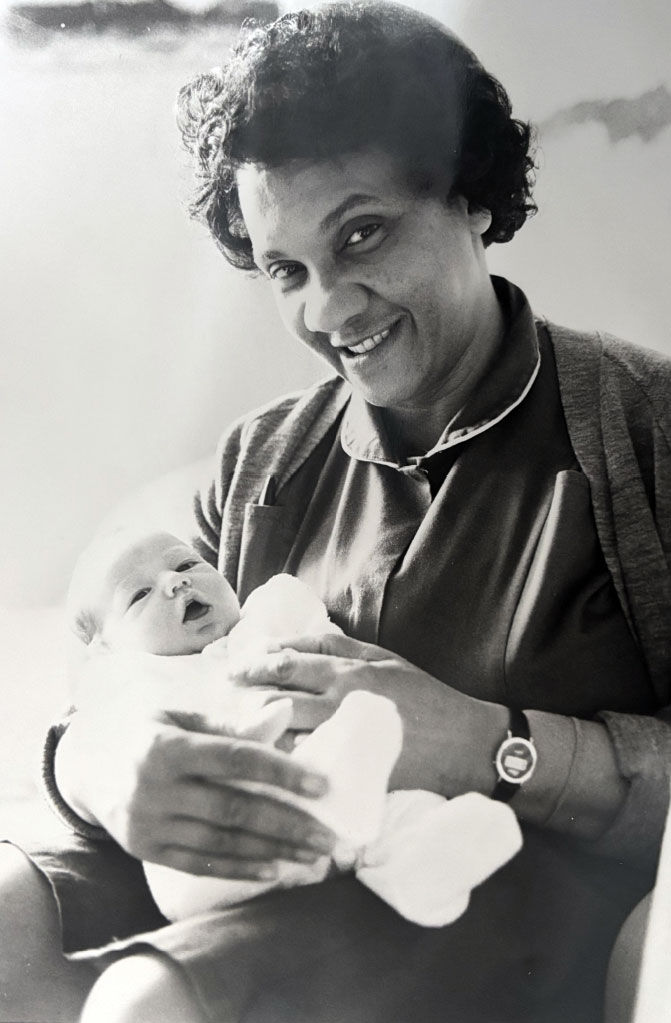
SOMEONE TO CARE FOR
Beulah Archibald
I was born in Jamaica on the 4th of February 1946. My mam and my dad weren’t married. In that culture, it's not every person gets married. I was the first child from my dad, and my dad was in his thirties. My mam was only maybe twenty-something and a very pretty lady. And my dad, very handsome. But my grandma – well, you talk about prejudice, you have it in my culture, a lot. My dad comes from a very educated family. My mam isn't. They can read and write, and that's it. My dad met my mam when she was working as a nanny. I'm the only one that my mam and dad had together. My dad married, and my mam had other [children].
I always wanted to be a nurse. I remember my mam gave me a doll. And I was there bandaging up the dolls as if they were poorly. I would be talking to that doll. As I get older, I was interested mostly in science. I love stuff like that. I thought I need to do something caring. I just want something to care.
I was brought up by my dad and I didn't know the reason why. [Later, my mam] explained to me that she knew, educationally-wise, I would be better off. She wasn't able to give me that. I was one of the lucky ones. When I finished high school in Jamaica, I got a scholarship to go to one of the colleges. But I always wanted to do nursing. I wrote my mum [in the UK] and said I would like to come to do nursing. At that time my mum was a single mum. And she saved up as much as possible and sent a ticket for me.
I had to go through all the processes of the Ministry of Health. Then I had to do application to different hospitals and stuff like that. We had to do it in Jamaica. I came here on a Jamaican passport. You couldn't just come in the country. You had to have a visa. So I wrote to several hospitals. I hadn't a clue where Yorkshire was from London, to tell you the truth. I didn't have the common sense to look on a map. So I wrote, I got a few applications and replies. And then I accept one here in Yorkshire. That was in Skipton. The reason why I accept it is because I wrote to say that I haven't seen my mam for many years, would it be possible if I can come earlier, spend some time with her? Because the training school started in the March. And they gave me the permission, so I came in the November. Winter.
"I always wanted to be a nurse. I remember my mam gave me a doll. And I was there bandaging up the dolls as if they were poorly. I would be talking to that doll.”
When I came first, my mam came with one of my aunts to pick me up from the airport. And it was freezing. It's a good thing she had a coat to wrap me in. My mam took me to Marks and Spencer, down in the West End. And she bought me coat, boots, everything. Vest - and that's why I still wear a vest. Even in the summer, I still wear a vest.
She sent me to Yorkshire. I wake up in the morning and when I look outside, it was all this white stuff. Because in London, we don't have snow like up here. And I thought, what's this? Back in the West Indies in Jamaica, when it's hot, they buy a big block of ice and they used to shave it down and put it into cups and then you put syrup on it. And when I look out there at the snow, I thought, that looks like shave ice! It was strange. We went straight to Skipton, Gargrave Road. To the nurse’s home. Rexwood Hospital. It’s now Airedale. And I went there, I haven't a clue. I didn't even know what course I were doing. I only knew I was going to do nursing.
One good thing, the radiators then in the bedroom was always hot. So that was good. I meet the other girls then, that was nice. There was one girl I met when I went for the interview at the Ministry of Health. I meet this girl, Halcyon. And we still keep in touch. She's still in Leeds. And we're still in touch with each other. [The others were] mostly black. Black, Asian. Because they need us to work. It's the workforce. They need us to work. I still remember the name of the tutor: Mr Riley.
The wards that we went on first were mainly, well, now they call it elderly care. But in those days, it was classed as the geriatric ward. So, mostly elderly. Because the patients that we look after, they were all white. [Some were] horrible. I can remember you go even to change them, get them dressed. “Oh, don't put your dirty hand on me.” They think we were dirty. “Don't touch me!” And so on. In the end, it does happen. We do what we can. I couldn't be bothered. I just wanted to be a nurse.
The girls used to call me bookworm. Because I wasn't out partying. It's just something from my dad. Because education was so important. If I come home and I don't do my homework and I go on to bed, he'll wake me up to do my homework. So that was discipline for me. I had to study. Always best student of the year. Best student of first, second and third year.
I applied to go to Halifax to do my general nurse training. I did the SEN and then I went and did the SRN State Register at Halifax Hospital. Again, top of the class. Because I studied. I think that's what got into my girls then. Then I got married. Had three girls. And then I applied to go and do mid-referee. And I did in those days, you have to do part one and then part two.
"The girls used to call me bookworm. Because I wasn't out partying. It's just something from my dad. Because education was so important.”
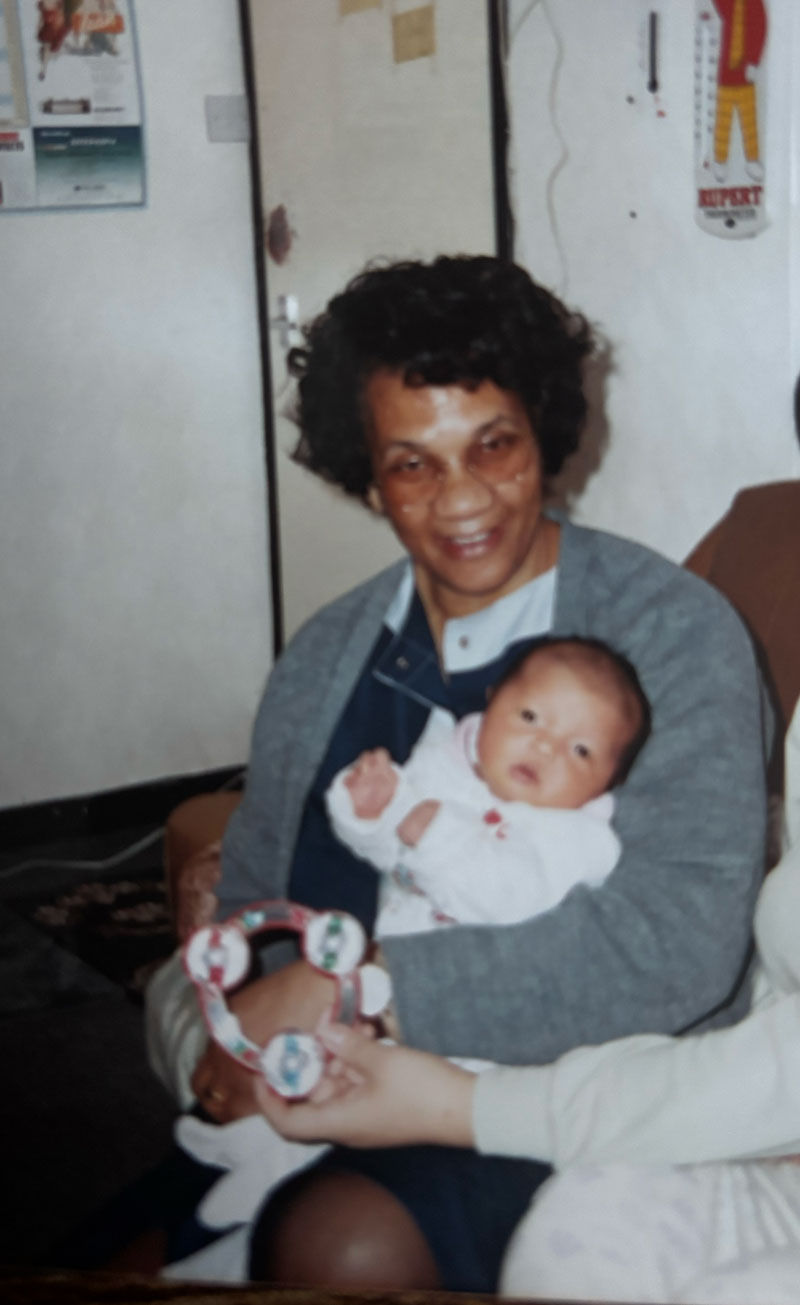
So then I applied to do my midwifery. You have to go into the community to work. Not just the hospital. In those days there was a lot of home birth. So we cared for those women in the community. Oh, I love it. I love it. That's why I ended up being a community midwife. I saw in the Leeds Evening Post the advertisement for community midwife and I applied for it. I went for the interview and there was lots of other people. I think it was about five people sat there. I went in and they interviewed me and she just asked me to wait outside. I was there for about 20 minutes or so. And then they called me back in and they just said there's two posts going. One is for a permanent area, but we have given that to somebody else. The other one is for relief. For maternity. It's a full-time job but just to relieve. Do you like it? And I thought, yes. I said,”Yes!”
I was going to areas that I had no idea. I were living over in Roundhay. The next minute I come [to] Guiseley to do visits and most of the houses they don't have numbers. They got name! Names. And then you walk and you're on the street and you're looking and you can't find it! You spend half an hour or so looking!
It was hard. Especially in the hospitals, doing delivery. You go to examine women they're telling you they don't want you to touch them. Which was hard. But it's amazing how things change because of the care you give. They're always asking for you, especially in the community. You get to build up relationships with people better. It was really interesting, my job. There’s a lot of change, but I have to work hard. Every five years you have to do refresher courses. It took me years to become a senior community midwife.
It was hard work, but I was determined. I'm not going to just go and sit down and go and work as an auxiliary nurse. I could have just stayed as an enrolled nurse. I said I need to achieve something, that’s what I’m going to do. That's why I always say to my children, you have to work hard to achieve anything. To be frank, you have to be ten times better than your white counterpart, to get anywhere.
A LIFE OF SERVICE
Elizabeth Boye

My father was in the army and I lived with my grandparents and my cousins. We all lived in one house. After the war, when my father came back, then we moved to our own house and he started working in the civil service. I worked with the civil service and I worked with the private hospital, then I came here. I came here to do nursing. I've always liked to help, you know, nursing. We are nine, nine of us, and I'm the eldest, so I'm always used to helping people, especially children. I don't want anybody hurting a child.
I [came] on a boat, a really a massive boat. More or less the same size of cruise ship - dancing and eating and doing all sorts. We started on the 13th of July 1960, and we got here 25th of July 1960. Twelve days. [It was} a new world, I would say, a new world. I was 24.
I started training at Ipswich. Ipswich Hospital, they were the people who accepted me to come and train here. Two of us were Africans. And four or so West Indians. It was okay with me, because my family, they were used to the whites. My great-grandfather was a Dane. You know, the sisters were very good. It was really very, very good. I never experienced any discrimination. I lived in a nurse's home. Then I left Ipswich and came to Leeds Seacroft Hospital to treat children and infectious diseases. I was in Ipswich 1960 and I came to Leeds 1961, December. It was all very nice. I miss Seacroft.
“I've always liked to help, you know, nursing. We are nine, nine of us, and I'm the eldest, so I'm always used to helping people, especially children.”
When I finished, I left Seacroft, I worked in different hospitals. I worked at Woodlands Orthopaedic; I worked at Cookridge Hospital before it was moved to St. James'; I worked with Bupa. Later on, I didn't work with children. All these, Woodlands, they were adults.
When I came, I didn't contact my family. Because I live in a nurse’s home, I didn't have a phone. Six years, I didn't contact them. I was working in a hospital in Manchester. One might the matron sent for me, she said, “I'm sorry, I'm going give you bad news. Your father passed away.” She sent me home. So when I left Ghana, I never saw my father [again]. In 1990, I've been here 30 years, and I haven't been to Ghana. I decided I'll take my children and my husband, all of us, to go. So 1990 was the first time I went to Ghana. When I went, I didn't know where my house was. It was so different.
I retired two months or three months before I was 70. I loved it. I really loved it. I cared for people.
You see, all my life, my mother was a nurse and she was a civil servant too. And the same thing I did. That explained it!
We had a sister on one of the wards. When you’re going her ward, you're always scared. She was a good, good sister. She teaches you everything, but very strict. Very, very strict. All of us, we were scared, but she was good. A healthy fear. I wish she's still alive. Sister Cohen. I'll never forget her name. I loved the kids. There were babies. Feeding them, changing them, giving them their medicines. Things like that.
Nursing was three years training. You start at Harrogate for nine weeks. From Monday to Friday. Then Friday, everybody goes to their hospitals for the weekend. Now after the first year, you will have an exam. And if you pass, you continue. Second year, you have an exam. If you pass, you continue. Then the third year was your Final. Now the Final, you have a hospital exam, and you have general nursing council exam. If you fail one, they won't give you the certificate. We did the Final at Sheffield Children's Hospital. Now I passed the written. But in the oral exam. They ask you questions. A lot of sisters were sitting there. Everybody asking you questions. And one question which failed me was, they asked me about if somebody taking drugs a lot - what do you call the person? And you know, I stood there. I couldn't remember what to say. And that failed me. Addicted was the word they wanted. And I thought, “Elizabeth, what a fool you are.” And that was it.

FROM ST KITTS TO CHAPELTOWN
Dossette Walker
I was born in St. Kitts, and I just had my 80th birthday. We live near the sea. So the sea, when it was, rough, it come in our backyard. I used to have to work to wash clothes on a Monday for all of us in the home. Our hands - no water pipe in the yard. But where we were living in Old Road, we had a water pipe. We had, you know, those stone oven, because my grandmother had a shop and selling all sorts of things, sugar cake, and when the men were working, she cooked meal.
My mother came to England in 1960. Then she sent for me, 62. I leave from St. Kitts, on the light aeroplane, went to Montserrat, collect people from Montserrat. Went to Antigua, collect. And then we had the BOAC to Barbados. From Barbados to Trinidad. And there is where I got the boat - from Trinidad. But when Trinidad dock opened, and I see ship - this heck of a thing! Oh my God! I was so frightened. About two weeks, nearly three weeks [on the ship]. At night time - wash my knickers and that. Sometimes I'm frightened to go up, because when the boat's rocking... I was in my teens.
Anyway, we reach Southampton – cold. I frightened like anything. It was different. The first job I got down North Street; there was a bottle shop. Then I went to Burton's to work. And my last job was St James' - auxiliary. I wanted to do my nursing. I wanted to see what it's like and the wards and so. But at that time you didn't get a lot of money. I started to work in 1973 at St James's.
The patients. You meet some horrible and then you meet some nice ones. Some of them were horrible. They had a little old lady, English lady. I said to her, “Good morning.” She said, “You're not going to put your black hand on me!” I said, “Well I'm here working.” “Nurse!” I said, “Listen. I have to do it and I don't want you to be wet – and I’m the only one here.” She scream, “Nurse! Sister!”
There was a pub – it’s still there - before you go into the main St James. The men there will be saying, “When are we going? I've got some I've got some money.” I said, “I can't do it!” “Yes, you can, nobody will know.” Another Englishman said, “Can I come home and live with you, I will pay my way.” I said, “Well, I'll have to ask my mum!”
STANDING UP FOR MYSELF
Sita
I worked in Woolworths. I was selling cosmetics. I was only 17. I tried the lipstick and rouge and see what it looked like first. I would tell my customers, “This looks nice, this suits you.” Then I work in the library, tidying the books up and also finding books for people what interest they have. I did about four jobs. I thought, I wanted to do law. With my uncle being a barrister, I will get lots of information from him. He said, “Apply to go abroad if you want to go abroad.
“Or else,” my father said, “you’ll have to get married”
And I said, “No way! Pa, I'm not. I'm not staying here. I want to go away.”
He said, “OK. I'll put you on a BOAC and you'll go. And I pay a one-way ticket.” He was a very strict man. He had 10 children and all of them have done well.
So I moved on, I applied. I did a bit of law at the law school. But I didn't like it. It was not what I expected. All these books… I didn’t like law, so I thought, I’ll branch out to nursing.
I came to England in 1968. When I came on the aeroplane, I was frightened. I was actually shitting bricks. I can't put it any other way. I never seen such bush in all my life! Loads of trees, you know. Thinking they were mangoes and things like what we have. And I'm looking for coconut trees. And the gentleman, lovely Englishman next to me said, “Darling, there's no coconut trees here.” He said, “It's all different fruit, apples, pears.”
I said, “And we eat all those?”
Anyway, he kept chatting with me. I was crying. Of course I'm crying. I've never been on a plane. And I'm on my own at that age. Then he said to me, “You'll be all right.” I said, “Jesus Christ, make sure I reach where I'm going because I can't sit on this plane anymore. I'm frightened to death.”
Oh, God, when I got to London, I thought, I don't know nobody here. All white people walking up and down, up and down. I thought to myself, oh, my God, how do I approach these people?
“I've always liked to help, you know, nursing. We are nine, nine of us, and I'm the eldest, so I'm always used to helping people, especially children.”
I stayed in London for a week. Until they sent me on a train. I'd never been on a train before. I started at Ilkley. I started training to be a nurse. It was lovely. I like it because you had a bed on your own, and you had a locker. You had a lovely curtain. You got Victorian tiny curtain, which I liked. The carpet was beautiful. And then I went to Wharfdale General Hospital. And a beautiful nursing home. I thought I was in the palace when I got there!
But there were matron sat those times. And I can remember her name very well: Matron Hagopian. And lots of boy, nice-looking white boys. I said, they don't look bad. They were all alright, trying to tell me not to cry. I’ll be fine. I don't need to worry. People were quite friendly. I never had any bad times. I've had very good experience with the English people. Some good, some indifference. We can't all be good, just like in our country. Everybody's not perfect.
I used to go for a walk after studying. I walked Curley Hill. I used to go to Curley Hill. And everybody knew me. I knew them all. Because I was a friendly person, you know. They’d say, “We've made cake for you. And we've got a cup of tea.”
I stayed about three years in Ilkley. I passed my exam and then I went on to do my RGN state registered nurse diploma. I didn't like some of the nurses. They were prats. But I did like my job. And if I had to go back to it now, I would. I would make patients comfortable, make them feel happy and not so miserable.
There were some courses. So many courses I did. I did an IV certificate. I can introduce medicine. I can put a drip in. I can put a line in. I can put blood up. I can give you injection. I can take blood out for you. I can work in the ambulance if I have to, you know. Probably that's why my granddaughter is taking after me. She wants to be a paramedic. She works in the ambulance now. She's a very clever child.
At St James’s, I worked in High Dependency, because I was qualified to do that. I think it's 8th Ward. I did like the sisters. I did like the ward. The doctors were nice, because they were all handsome. Many doctors asked me out. I said, “No, I'm not on the look out for anybody!” I met my husband in Ilkley. He had a motorbike. He was studying and he used to come to meet a friend [who was] from Mauritius as well. The friend says to him, “Oh, I like that girl.” Then he said, “No, no, you can't like her. I've got my eyes on her!” And I had my eye on him because he had lovely curly hair. I like curly hair. I have a crush for curly hair, you know.
I did face one racist. And that was when I was working at Ilkley. This man was from Grimsby. He was a trawlerman. He came in, he could hardly breathe. And he's got something stuck in his hand. A hook. And wouldn't let me put a line on! He was fat and obnoxious and bright red like a tomato.
I said to him, “I will have to put this line in.”
He said to me, “You're not putting your black hand on me.”
I said, “Okay.” I've got the tray ready, the trolleys, sterile, everything, the gloves. I said, “I'm the ward sister here. If you don't want me to touch you, that's fine. You will die.” I told him straight.
My manager, Joan Brazil, she came down. Well, she's Jewish. She said, “Pull the curtain around. You get his arm.” She and I put the drip in.
And he said to me, “Thank you.”
I thought, you don't need to bother. You already called me a black bitch. You can piss off! I didn't want to be so rude. But that's how he was. He's a nasty piece. Anyway, I did my best for him. That was my only bad time.
I enjoyed my career. If I had to go back to nursing now, I would. But it's not going to be the same. It's quite different. What I see in nursing now. If I go to visit a friend or someone who's ill. What I see is deplorable. Because the patients are not being looked after properly.
I've gone through a lot in my time, I tell you. I mean, you know, when I tell my sisters abroad, they laugh. They say, “You've got some guts, Sita.” My sister said to me one day, “Would you ever come back home?” I said, “Shitting hell, no, never! I've made my life here.”
WHY WE CAME
Denise, Dossette, Annette, Sita

All the women we spoke to came to Leeds to seek a better life. But it’s really important to note that they were invited. Post-war Britian desperately needed workers for the newly formed NHS and actively recruited in the West Indies and in parts of Africa. Many of the young women had a propensity for the caring profession. Beulah’s story of caring for a doll was a precursor of her career as a midwife. Others had family members as inspiration. “My godmother in the West Indies was a nurse,” said Denise. “When I came to England, I'd never heard auxiliary. So I just asked to be a nurse.” She then discovered there was training involved and took to it very naturally – she trained as a State Enrolled Nurse (SEN). There were certainly ups and downs. “The sister, she said to me, you have a test to do, but I'll help you,” continued Denise. “So I passed the test, so then I started training. All the others, my colour, they were auxiliaries. So I was in between. The white didn't like me, the black didn't like me. But as I said, the sister on the ward, she said to me, I look out for you.”
“I care for people,” said Dossette. It’s as simple as that! “I just like being with people, helping people,” said Annette, who started her working life in a fish canning factory in Hunslet (“I hated that job”) but soon moved on to the NHS. “I just went back to work after one of my babies and I got the job at the LGI. I was doing cleaning and then from the cleaning they was going around and asking if anybody interested in doing auxiliary nursing. So I said, yes, I won't mind. And the result, I get into it. well, in hospital you don't just take to one job. They pass you on to more, one after the other all the time. Now I see some things in hospital, some sights!”
Some sights indeed - nearly all the women told us of their experiences of racism in Leeds. One nursing auxiliary, who came to the UK from St Kitts in 1959 and worked for a time in a Leeds Hosptia. “I remember once, we were working and it was lunch time. So we went to the fish and chip shop. This woman was there with her little girl. The little girl started feeling the back of me. So I turned around and looked at her. I said, what are you doing? She's looking to see if I've got tail. Well, the woman didn't know where to put her face.” These stories of discrimination are widespread.
Gradually, though, the nurses and other NHS staff found acceptance and community in Leeds. Sita came from Trinidad, while her family remained at home. And she never even considered returning. Many of the women we spoke to proudly showed us pictures of their children and grandchildren. They are truly “elders with roots” in their home countries – and they have grown new roots their adopted city of Leeds.